
Get in the Race: Keeping the Lower East Side Green
Running to Conserve the LES with Friends
Today is the New York City Marathon, one of the city's most special occasions. I’ve completed it once — no finish time will be revealed, as the day did not go as planned — and I’ve jumped in to run miles 17–23 with my cousin, who’s approaching 50 marathons, in at least five races.
Over the past decade, the NYC Marathon has grown into an enormous spectacle, losing some of the intimacy, quaintness, and exclusivity that once characterized the event.
Nevertheless, I do not mourn the past.
People should come to New York City to experience one of the world's great sporting spectacles, taking in the sights, experiencing the warmth of the crowds, and enjoying an unparalleled tour through some of the city's finest and most spirited neighborhoods.
Whether you're participating as an athlete, cheering from the sidelines as a spectator, or escaping the city altogether to avoid the crowds and the endless street closures, the marathon is a reminder of what makes New York so extraordinary.
While Marathon Sunday is a special day, I'd like to shed light on three organizations that make the Lower East Side a special place to live, not just one day a year, but every day. They are:
Each has its own mission, history, and priorities. But what they share is a commitment to improving the public spaces that contribute so much to the character and quality of life on the Lower East Side.
And each offers an opportunity to get off the sidelines and into the action…without having to jump a stanchion or get chased down by a cop.
Seward Park Conservancy
The Seward Park Conservancy, whose board I advise, supports one of New York City's most historically significant public spaces. (Click here to read more about the establishment of Seward Park.)
Seward Park is home to the nation's first municipally built playground and serves an extraordinarily diverse community, offering everything from slides and swings to courts and gardens. It is an ideal gathering space, offering visitors opportunities for both recreation and relaxation.
The Conservancy works alongside NYC Parks to support horticulture, environmental stewardship, education, advocacy, and community engagement. Its annual bulb planting is one of several opportunities for residents to contribute directly to the park's upkeep and improvement.
Last weekend, I took part in the Conservancy's bulb planting event. It was a wonderful occasion, giving the board, volunteers, and residents a chance to mingle and to get their hands dirty — literally.
Thousands of bulbs were planted throughout the park, where, with a little water, warmth, and time, they'll hopefully emerge next spring. Along with my family, I spent a couple of hours digging into the soil, tilling it, planting bulbs, and covering them up.
It's a simple activity, but a rewarding one. When those flowers emerge next spring, we'll have the satisfaction of knowing that we played a small role in bringing them to life.
“See those daffodils? Remember when we planted them?” I’ll ask my boys. (Then, I’ll say, “That was the morning in which you had two Boston Kreme doughnuts and six munchkins.” That will help jog their memories.)
Friends of Corlears Hook Park
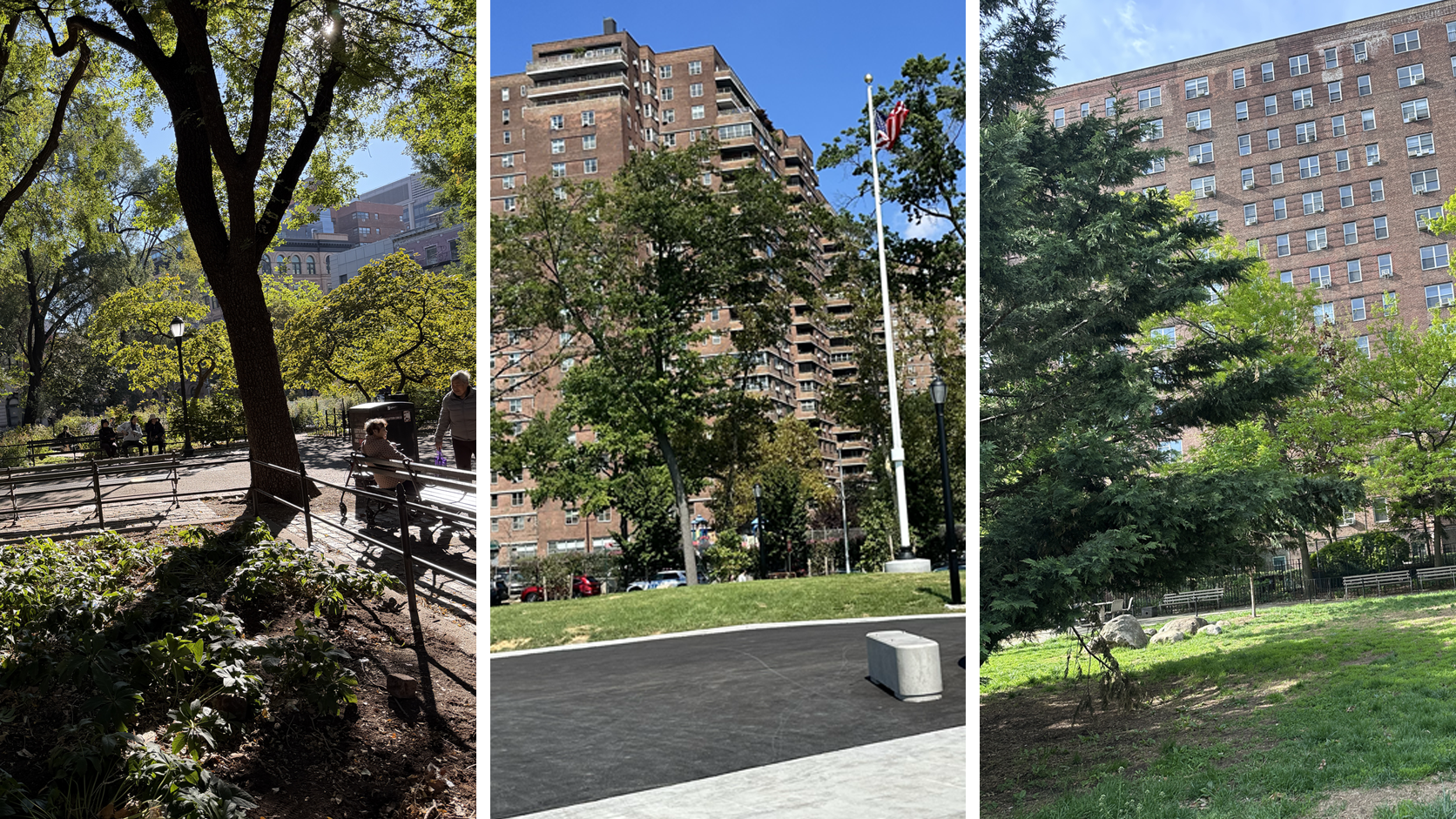
Friends of Corlears Hook Park is another fantastic organization dedicated to preserving and maintaining a local greenspace: Corlears Hook Park, which nestles up against the FDR at the intersection of Cherry and Jackson Streets.
Founded in 2014, the organization has led countless cleanups and planting events, supported capital improvements, and provided free programming that includes jazz, dance performances, fitness classes, and family activities. They also host movies in the park during the summer, a neighborhood favorite for people who can manage to stay awake and go out after 8 p.m.
Friends of Gulick Park
Friends of Gulick Park cares for the space between Willett and Columbia Streets just south of Delancey Street, once known as Sheriff Park or Elephant Park.
Area residents will strongly associate this park with either Hillman Housing Cooperative or Amalgamated Housing Cooperative, both of which are a stone’s throw away. The organization's work has encompassed beautification, community programming, advocacy, and efforts to make the park a more welcoming place for neighborhood residents. These efforts helped bring about a major renovation of the park, which reopened in 2020 after years of deterioration.
The value of stewardship…and real estate
Maintaining public parks in New York City is no small undertaking.
NYC Parks employees face substantial demands on their time and resources, from maintaining landscaping and infrastructure to managing sanitation, vermin, public safety concerns, and the complicated realities of urban life.
Parks are accessible public spaces, and that accessibility is part of what makes them so valuable. It also means they can become places of refuge for people experiencing homelessness, substance abuse, and other challenges that extend well beyond the boundaries of any individual park.
These are complicated issues without simple solutions.
The volunteer organizations that support our parks aren't substitutes for municipal services, nor can they be expected to solve the city's broader social problems.
But they can — and do — make an enormous difference.
Through fundraising, advocacy, planting, maintenance, programming, and community organizing, they augment the work of NYC Parks and help ensure that these public spaces remain attractive, welcoming, and actively used. Their efforts are often tireless, frequently unheralded, and overwhelmingly dependent on the generosity of neighborhood residents who volunteer their time.
Let’s also consider a real estate angle.
Public parks are recreational amenities, yes. But they're also neighborhood assets that contribute to quality of life, residential desirability, and the character of the surrounding community.
Consider the East Side Coastal Resiliency Project, an immense public undertaking designed to reduce coastal flood risk along portions of Manhattan's East Side while rebuilding and improving important public spaces along the waterfront. It's an investment in both the neighborhood's physical resilience and its future.
More For LES has covered it extensively:
- Nowhere to hide while we subside
- Says project, "Controversial? Who, Me?"
- Disaster afoot? Raise the shoreline
- The ESCR's impact on resale in 10002
- "They Bang Like Crazy"
- Subvert the "squeeze" and bypass the "pinch" with a flyover... not a combover
An enhanced and more resilient coastline will reduce coastal flood risk, but will also provide recreational outposts for New Yorkers and attract visitors and residents — longtime and new. For residents, shareholders, and local business owners, the hope is that as tides rise — a reference to global warming — so, too, do property values.
But investments in our parks don't have to involve massive infrastructure projects or hundreds of millions of dollars. Sometimes, they take the form of a few dozen neighbors showing up on a Saturday morning with gardening gloves and shovels.
The work of these smaller organizations contributes to the attractiveness and upkeep of the neighborhood, helping support the conditions that make people want to live here, visit, and invest.
Don't just watch the race
Regardless of where you stand — or run — as the sound of rubber pounding on pavement happens today, I encourage you to get involved in one of these local organizations and help make the Lower East Side an even more special place to live.
The “neighborhood beautification” race is vital…and the bonus is that you don’t have to train for it.