

Says project, "Controversial? Who, Me?"
The East Side Coastal Resiliency (ESCR) project
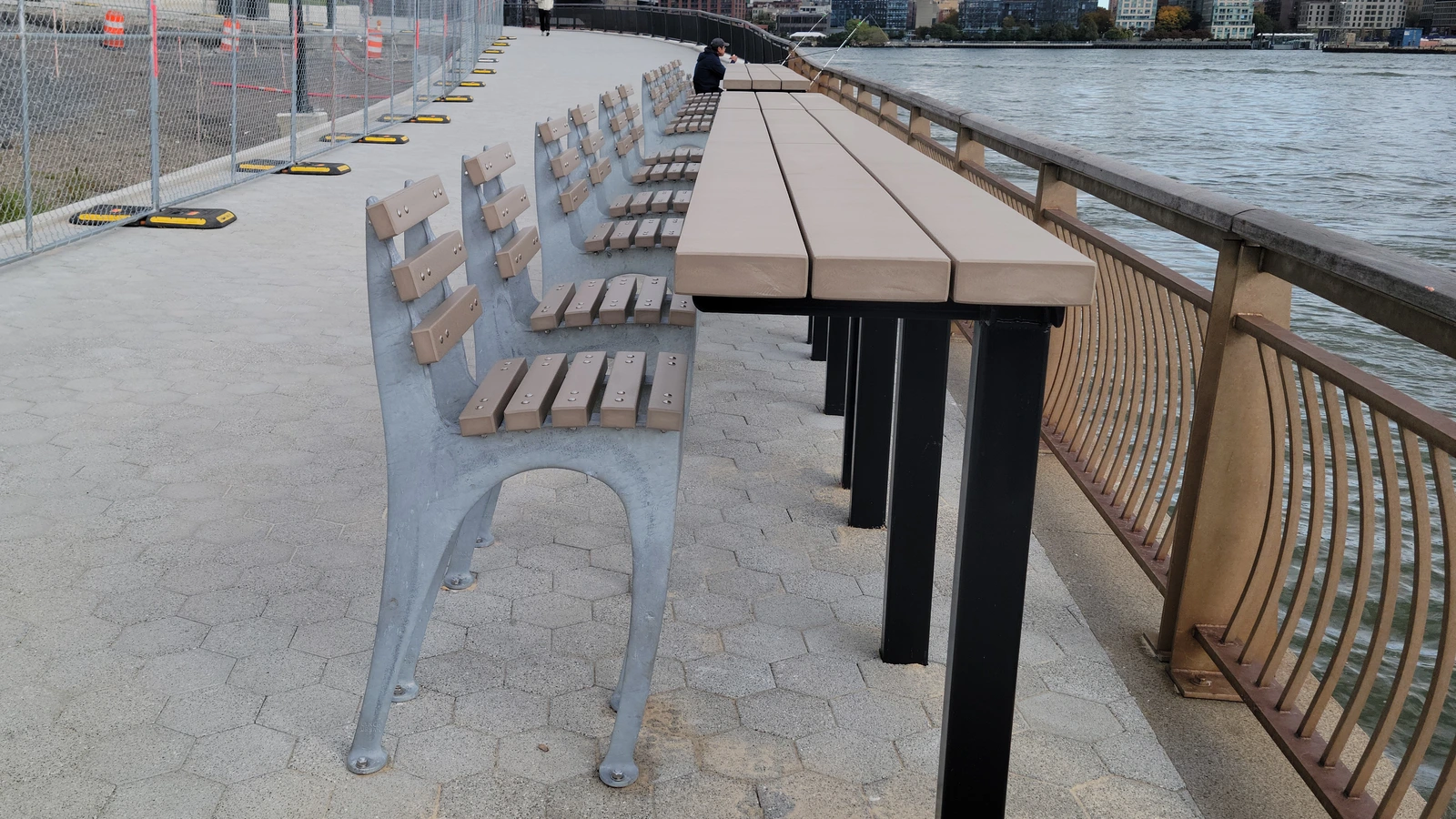
Mind the floodwaters...
We’re diving back into the East Side Coastal Resiliency (ESCR) project—a $1.45 billion initiative that’s lifting East River Park, beautifying Manhattan’s East Side, and upgrading sewage and drainage to reduce the risk of flooding from natural disasters.
According to World Landscape Architecture, Phase 1 (Montgomery Street to East 15th Street) wrapped in October 2024—ahead of schedule and $10 million under budget.
The upgrades? Elevated greenways, 79-foot-long floodgates, and raised parkland at Asser Levy Playground, Murphy Brothers Playground, and Stuyvesant Cove Park.
Now under construction: Phase 2
This next chapter tackles the full demolition and rebuild of East River Park—a move that’s controversial but deemed essential for raising the park’s elevation and protecting nearby residential zones.
Why the controversy?
Let’s assume (conservatively) that 5,000 people used East River Park daily. Factoring in repeat users—joggers, dog walkers, and the brave few fishing the East River—we’re looking at tens of thousands of New Yorkers whose routines, recreation, and mental health are tied to this green space.
And New Yorkers—and all humans—depend on routine. Now? That crowd’s jogging on 6th Avenue, walking their dogs over the Williamsburg Bridge, and fishing in the fountain at Washington Square Park. (Let’s hope not.)
Cheekiness aside, Yale E360 covered local outrage over the closure. Still, designers argue the long-term, multi-generational safety and usability upgrades will be worth it.
Phase 2 is scheduled to wrap in late 2026—right around the time the newly displaced East River fish are expected to resettle in New Jersey.
Design with purpose
Engineers and landscape architects took a nuanced approach—blending community access with climate resilience. Floodgates were installed to preserve neighborhood connectivity (like at Asser Levy Recreation Center), while seawalls and greenways were built into the park’s layout.
On the waterfront side: salt-tolerant plants and permeable surfaces, built to flood without damage. Smart, right?
But what about shade?
In the LES, some neighbors have noted the lack of trees and shade. (Granted, there’s plenty under the Williamsburg Bridge. ) But with flood prevention as the priority, tall shade trees might not be feasible—or may not survive a strong storm surge.
So... Is this just about raising the shoreline and upgrading the parks?