

The missing piece at Corlears Hook
The Future Home of the Lower East Side Ecology Center
For the past three years, Lower East Siders have watched one of the largest public works projects in New York City unfold. The East Side Coastal Resiliency (ESCR) project has transformed John V. Lindsay East River Park from south to north, replacing aging infrastructure with a waterfront designed to better withstand future storms while reconnecting residents to the East River.
Living a short walk from Corlears Hook Park has given me a front-row seat to that transformation — one which equally enchanted and enraged residents of East River Co-op. Some residents (including myself), have written about the project. Others, me again, have even made music video parodies about it.
The most recent updates, covering the first half of 2026, show steady progress throughout the project. Work continues on flood protection infrastructure, park improvements, the East 10th Street Bridge, and major sewer upgrades. More than 700 trees have been planted, new landscaping has taken root, Phase 1 park amenities remain open, and community engagement has expanded through educational programming, workforce initiatives, and a new public art program.
Yet, as the project marches north, many of us have been left wondering: what exactly will become of the parcel of land behind the Corlears Hook NYC Ferry landing?
Recently, I had an opportunity to find out.
Through my involvement with the Seward Park Conservancy, I've been fortunate to get to know many of the organizations helping shape and care for the neighborhood's green spaces, including Friends of Corlears Hook Park and the Lower East Side Ecology Center. (If you've read our Neighbor Profile of Michael Marino, you'll already recognize one of those connections.)
On a particularly buggy summer evening, I joined neighbors, project team members, and community leaders to preview plans for the Lower East Side Ecology Center's future home. Alongside a physical model of the project, attendees were able to review architectural renderings and learn more about the vision for the site — all while enjoying snacks and ice cream from neighborhood favorite Julia Jeans.
Much of what was presented appeared consistent with materials previously shared with Community Board 3 earlier this year, although it's not entirely clear whether those plans represent the final design or whether refinements have since been made.
From both the presentation and the model, however, the overall intent is clear.
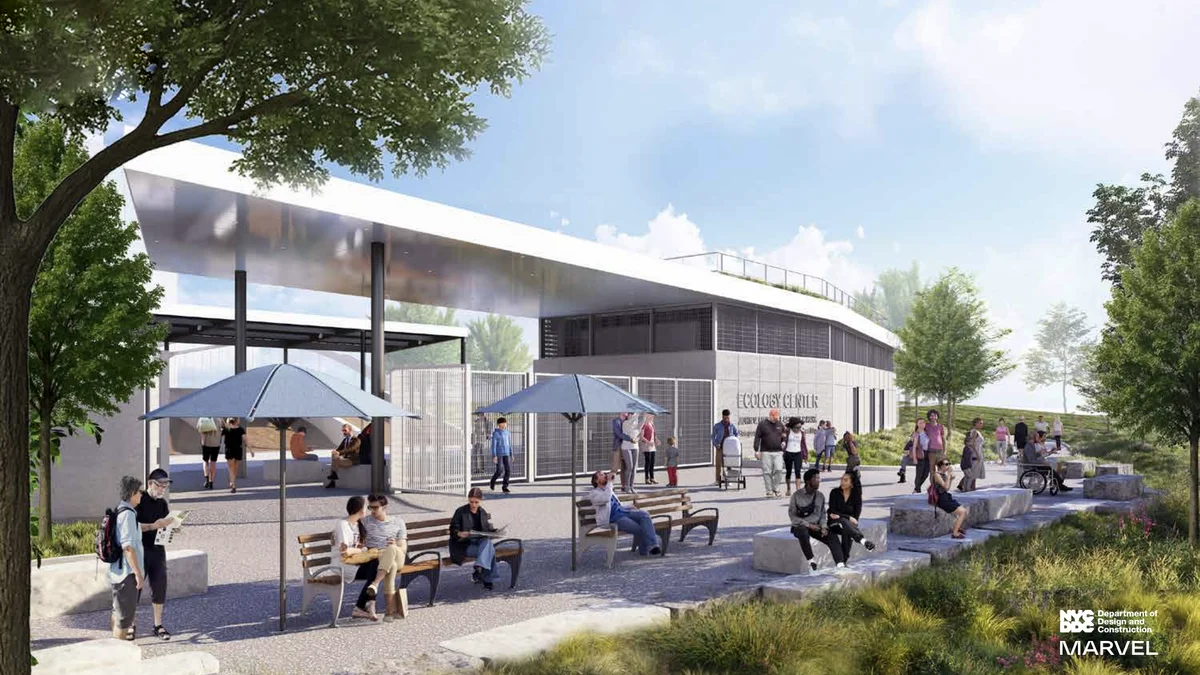
Rather than placing a standalone building within the park, the Ecology Center's new home is designed to become part of the landscape. The building takes its cues from East River Park itself, incorporating many of the same materials, forms, and landscape elements that define the surrounding environment. The goal is to create a seamless transition between architecture and park, reinforcing the site's connection to both nature and community.
The project is more than just a building. It will continue to serve as the home of the Ecology Center's composting operations while also becoming an educational destination. Plans include an educational building with classrooms, offices, gathering space, demonstration gardens, outdoor learning areas, a green roof, and improved composting facilities designed to better manage operations while supporting public programming. Native and maritime plantings, layered groves, woodland edges, and pollinator-friendly landscapes will surround the site, extending the ecological character of East River Park and creating another welcoming public space along the waterfront.
For longtime residents, especially nosy ones, the project answers a practical question.
Many will remember the site as home to large piles of decomposing organic material. While those composting operations have always served an important environmental purpose, they weren't necessarily the most pleasant odor to smell while walking to the ferry or enjoying the waterfront. (That’s the reason residents were nosy, of course!)
The new facility doesn't replace composting; it elevates it. Compost operations will continue, but within a thoughtfully designed campus that better manages those functions while making them visible, understandable, and accessible through education. Public access, demonstration gardens, and outdoor classrooms will convert a compost yard into a more holistic — yet functional — destination.
In many ways, this project completes another important piece of the East Side Coastal Resiliency Project.
The resiliency project itself is about protecting Lower Manhattan from future flooding and creating a safer, more resilient waterfront. The Ecology Center's new home complements that investment by championing another kind of resilience: educating New Yorkers about composting, native landscapes, biodiversity, and sustainable environmental practices.
Together, the two projects complement each other: One protects the city from environmental threats. The other helps cultivate the environmental stewardship needed to protect it for generations to come.
For the Lower East Side, these investments should deliver benefits well beyond ecology. A more beautiful, accessible, and educational waterfront makes the neighborhood more enjoyable for residents, more attractive to visitors, and, over time, should continue to strengthen the desirability of living nearby. As East River Park reopens section by section and projects like this come online, the East Side continues to gain not just additional parkland, but places that enrich the community while also enhancing the desirability to live within 10002.
You may also enjoy

Meet: Daisy Paez
A conversation with Lower East Side advocate Daisy Paez about community, affordable housing, local institutions and the importance of showing up for neighbors.