
Meet: Daisy Paez
More For LES: Neighbor Profile

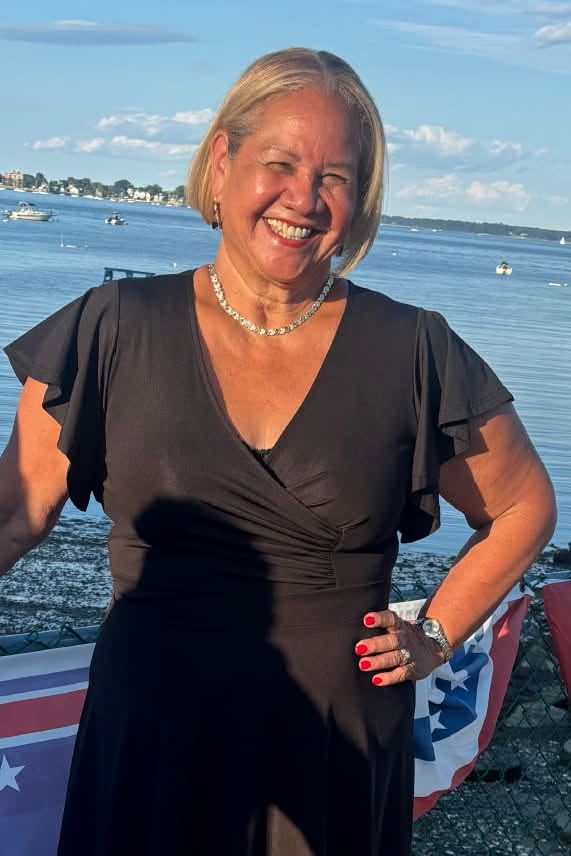
A few weeks back, I had the privilege of sitting down for coffee with one of the Lower East Side’s most ardent advocates and a truly special human.
Her name is Daisy Paez.
Daisy is a lifelong resident of Lower Manhattan who raised her two children on the Lower East Side. For more than two decades, she worked at the Educational Alliance, helping provide social services to the community and ultimately serving as a community liaison.
But these are mere bullet points in a résumé, and they speak neither to her influence nor her impact.
Daisy has devoted her heart and soul to making the Lower East Side a special place for people of all backgrounds and persuasions.
“I focus on being inclusive,” she says, taking a deliberate pause before the word “inclusive” to accentuate its importance.
Daisy shares countless anecdotes about conversations she’s had, people she’s brought together, and actions she has taken on behalf of the neighborhood. Although she works closely with Eric Diaz and Vision Urbana, she makes a point to tell me about a time when someone complained to her about the people lining up for UA3’s Community First Food Pantry, which takes place on Mondays and Thursdays at 384 Grand Street, next to Grand Street Pizza.
“Then you should get there one hour earlier,” she recalls responding.
The complaint, as Daisy describes it, wasn’t really about the mechanics of the food pantry. It was about the people standing in line.
This is what is so critical about her inclusive advocacy: Her definition of community doesn’t stop at the boundaries of her building, her background or any particular constituency.
Even if you don’t know Daisy, you might recognize her work on the Lower East Side. During the holiday season last year, 24 illuminated snowflakes appeared on the lampposts along Grand Street. The lights were there because Daisy decided the neighborhood needed a little more holiday cheer and, working with the Lower East Side Partnership and City1 Maintenance, figured out how to make it happen.
It’s a relatively minor contribution in the scheme of Daisy’s contributions, but a highly visible one.
Over the years, she has advocated for affordable housing, transportation accessibility and youth programs, while working with older adults to promote wellness, access to the arts and community engagement.
Her advocacy has also produced tangible results. As president of the Grand Street Guild Residents Association from 2014 to 2017, she established a community center and successfully pushed management to reaffirm its commitment to long-term affordability. She was elected Democratic District Leader for Assembly District 65, Part B, in 2017, helped establish the Three Bridges Democratic Club and, in 2020, was recognized by State Senator Brian Kavanagh as a New York State Senate Woman of Distinction for her service to the community.
Her relationship with the Educational Alliance may say even more about her.
Daisy first arrived there not as a community leader, but as a struggling young parent. She was looking for support and found it. And then she stayed for decades, eventually becoming part of the institution that had once helped her. She worked across programs serving children, families and older adults, and the Educational Alliance became a place where she learned what community service could look like.
Later, I watch an interview of Daisy reflecting on those years. She recalls watching mothers arrive with their “heads down” and leave with their “heads raised up.” The Educational Alliance, she says, taught her “to serve others in a compassionate and humble way.”
That trajectory — from someone who needed her community to someone her community came to depend upon — may explain much about Daisy.
“What can I do for you?” she asks me.
I tell her that I’ve come to care deeply about this community, having lived here for nearly a decade.
Her response is immediate.
“Which community?”
I understand the question. The people I represent professionally are looking to buy, sell or invest in real estate. Their concerns are not necessarily the same as those of people living on fixed incomes or in public housing, families who have been here for generations, neighbors whose first language is not English, or someone whose next meal is made possible by UA3.
“Everyone living within 10002,” I tell her.
It’s an easy answer to give. Living up to it requires considerably more.
As Daisy has demonstrated, when we use the word “community,” we have to engage across all of its different domains.
That means our schools — whether PS 134, PS 184, PS 42 or PS 110. It means our religious institutions, from Orthodox shuls to Catholic churches like St. Mary’s. It means local business proprietors, the Lower East Side Partnership, Community Board 3 and the countless other organizations serving different parts of the neighborhood.
And sometimes it simply means attending an event, talking to someone we don’t already know and trying to understand where people are coming from and what they need.
Because all of our actions have an impact.
Before we part ways, Daisy tells me about an upcoming opportunity to do just that — to engage with fellow neighbors. On Saturday, September 19, Daisy is presenting a Hispanic Heritage Celebration at Essex Market, with live music, food and activities from noon to 4 pm.
And even if you don't have Hispanic heritage, go.
It’s free.
Eat something. Speak to people. Dance. Even if you feel a little out of place doing any one of those things. Especially then.
Because I know the answer to “Which community?” isn’t about what you say. It’s about showing up.
Learn more about the Hispanic Heritage Celebration here.