

Disaster afoot? Raise the shoreline
The East Side Coastal Resiliency (ESCR) project
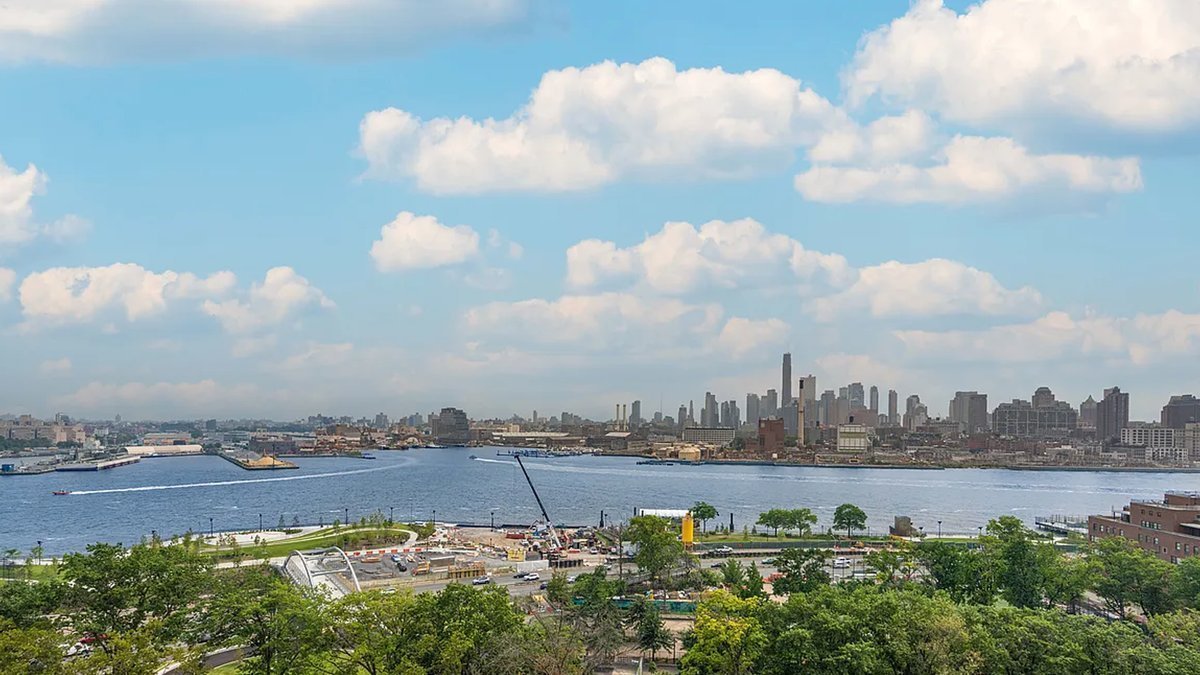
Last time, we touched on urban development projects, looking at the impact of the Second Avenue Subway project as a precursor to the East Side Coastal Resiliency project—our main focus.
I also dropped “They Bang Like Crazy,” my latest parody and tribute to the Fine Young Cannibals.
(Also, worth mentioning—despite the lyric—when it comes to the East Side Coastal Resiliency project, there is no Phase 3. Just like, “There is no Dana, only Zuul.” )
What is the East Side Coastal Resiliency (ESCR) project?
ESCR is one of the most ambitious climate infrastructure undertakings in New York City’s history. Stretching along almost 2.5 miles of Manhattan’s East River waterfront, the project is intended to protect over 110,000 residents—including 28,000 in public housing—from the growing threat of coastal flooding.
You know, stuff like this:
On that, I received the following from Manhattan Borough President Mark Levine, in response to that one-off storm:
“Hours before the {scheduled Dominican Heritage event}, a storm rolled in that turned streets into rivers, disrupted public transportation, and made it unsafe for people to return home, let alone gather in celebration. Like so many of you, I was deeply disappointed.”
Specifically, ESCR will create a flood protection system comprsied of floodwalls and floodgates that will integrate with local streets, while elevating East River Park and creating a new landscape surrounding Corlears Hook Park, Murphy Brothers Playground, Stuyvesant Cove Park, and Asser Levy Playground. The project will also provide for investments in underground interior drainage improvements to improve the capacity of the sewer system.
In terms of scope, if we assume ~1.6 million people live in Manhattan, the project impacts nearly 7% of residents overall.
But it’s not entirely about safety, as it also touches upon beautification. As Deputy Mayor Meera Joshi puts it, ESCR is supposed to do “double duty,” blending physical protection with public amenities.
The project was conceived in response to the devastation of Hurricane Sandy in 2012, which caused billions in damage and left vast portions of New York underwater. That crisis triggered the Rebuild by Design competition, an initiative led by HUD and The Rockefeller Foundation to foster innovative, climate-forward urban solutions.
One of the winning entries, The Big U, envisioned a continuous 10-mile loop of flood protection around Lower Manhattan. ESCR is the first fully realized piece of that larger vision.
The NYC Department of Design and Construction and NYC Parks led the project, which is jointly funded by the City of New York and the U.S. Department of Housing and Urban Development (HUD).
The total price tag? $1.45 billion.
How’s it all going, where do we stand, and what’s it doing to 10002?