

The Matchstick Building: Where there's smoke, there's fire
Ambition v. Arrogance: 432 Park
Ambition and Arrogance are close cousins. In this case, though, their proximity is precisely 1,396 feet apart.
For nearly a decade, The New York Times has chronicled the saga of 432 Park Avenue, a gleaming white monolith on Billionaires’ Row whose height is matched only by the scale of its problems.
But first, some nostalgia.
The New York skyline is iconic . In our collective memories, drawn from postcards, movies , and personal visits , we see the Empire State Building , the Chrysler Building, the Woolworth Building, the Brooklyn Bridge , and (now) the Freedom Tower . Our early skyscrapers seemed to defy the impossible . At the same time, they were built with materials that have outlasted their architects and the eras in which they were born.
Yet, buildings like 432 Park have shot up and are now part of that time-tested skyline. While change is welcome and progress admirable, when new structures prove risky or fragile — testaments more to wealth than wisdom — they become a black eye on the face of Manhattan.
It’s worth remembering that height alone is not an achievement. (That, of course, comes from someone who’s 5’7, but I’m not anti-skyscraper.)
More to the point, it’s not even 432 Park Avenue’s height that make it remarkable: It’s the building’s extreme proportions . With a slenderness ratio of 15:1, it is nearly one-third the width of more traditional skyscrapers like the Empire State Building. For over a century, the conventional logic of high-rise construction has been simple: build wide at the base, taper at the top , and let shape assist structure.
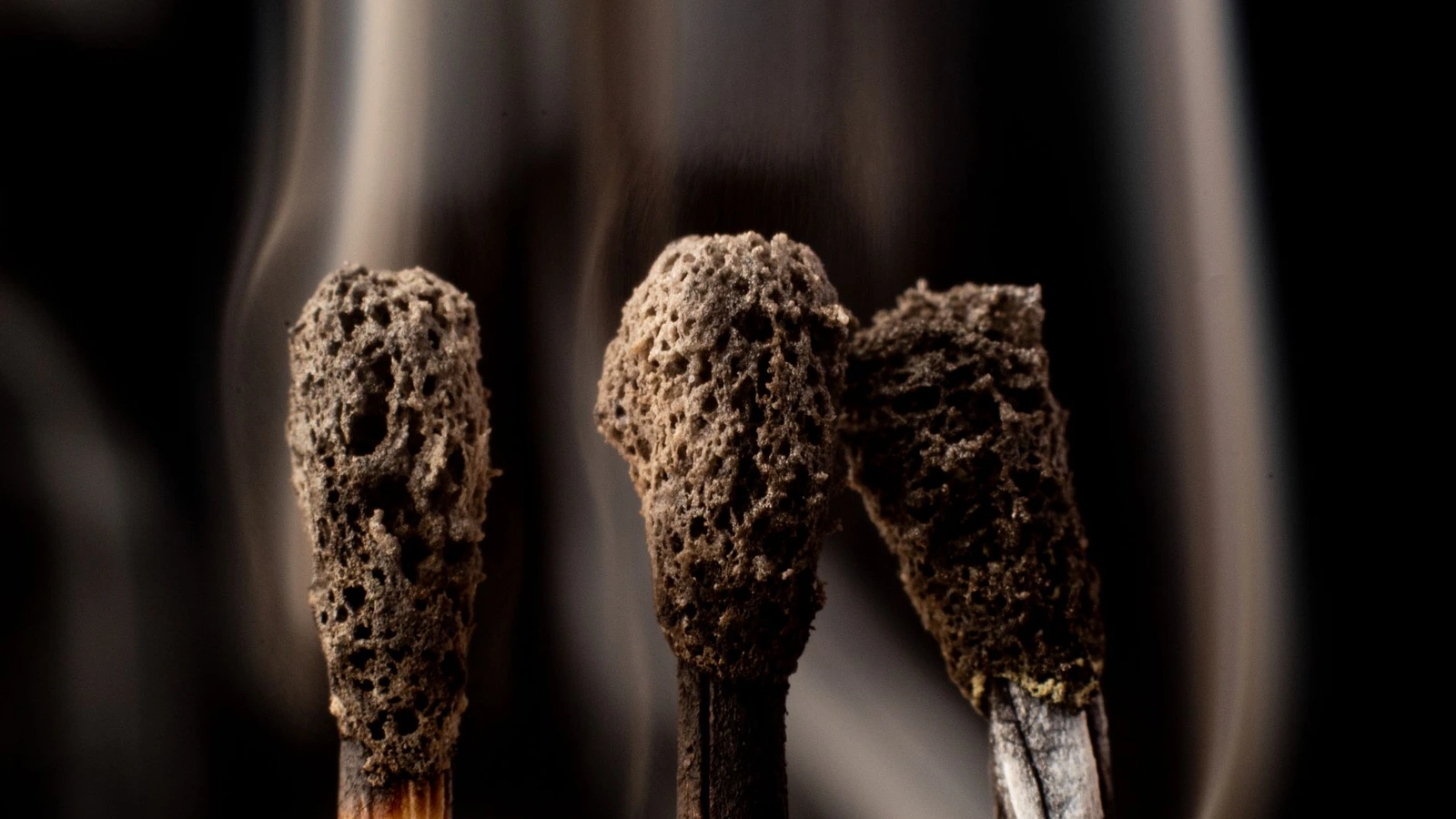
It didn’t get its nickname, The Matchstick Building, for nothing.
The issues with this building are now rather well-known, but it’s worth refreshing . Engineers designed a boxy, rectilinear tower with open-air floors meant to cut wind load , but early concerns about the building’s stiffness, sway, and wind performance were raised long before construction began .
Did the concerns slow anyone down? Neigh.
Aesthetic purity — an all-white concrete façade , rather than a darker (safer) gray — won out over engineering caution, even though the concrete mix required for a light shade was notoriously difficult to make durable . Internal emails now show that cracks, voids, and moisture-related risks were being flagged in the earliest mock-ups while the team pushed ahead anyway, driven by ego , the desire to achieve a singular architectural triumph , and confidence in a luxury market that once seemed limitless.
Now, years later, that decision-making is facing a reckoning . The condo board at 432 Park is suing the original development team — Macklowe Properties, CIM Group, Rafael Viñoly Architects, and the structural engineering firm WSP — alleging defective construction, concealed risks, and fraud in the marketing and sale of units .
Owners are difficult to pity, as they’re considering “modest” units like 54a (asking $27.75M) . Still, they are looking for someone to blame as property values fall (and, candidly, as people fear the building may do, as well). After years of swaying — that being the building, but also residents’ litigious penchants — lawsuits are locked and headed nowhere .
Bringing the focus back home to 10002 , the buildings rising down here are not supertalls .
Take, for instance, one we’ve covered previously, One Manhattan Square, and one we haven’t, 222 East Broadway. These are hardly small buildings by any measure, yet they are absolutely dwarfed by 432 Park . Down this way we also have 161 Maiden Lane, a half-finished, lawsuit-riddled tower on the waterfront which was abandoned mid-construction and is now frozen in place . Fortunately, for the safety of everyone, the work on that site has stopped . But the very fact that such a structure stands unfinished on our shoreline is itself a blight — a literal, visible black eye on the skyline . And at 670 feet, it’s not exactly subtle .
One of the beautiful things about the Lower East Side is precisely that it isn’t the home of skyscrapers . It’s more down to earth — literally and spiritually . That’s part of what makes it special to live here and be part of this community . We’ve covered architects like Herman Jessor, who designed spaces meant for people to live in comfortably across ages, cultures, and life stages. His buildings weren’t about spectacle; they were about humanity .
So as we close this out, let’s acknowledge two truths.
First, without ambition, ego, and the drive to outdo and uplift , New York City would never have become the extraordinary place it is . Our skyline is a monument to the restless spirit that defines us .
But second, if ambition comes at the price of responsibility and public safety — if it produces buildings meant more as trophies for the wealthy than homes for real people — then perhaps it’s time to rethink our approach to development .
Sources: NY Times, CityRealty, Council on Tall Buildings and Urban Habitat, The New Yorker