

A royal flush
Plunging Back into an Offering Plan to Unstop a Toilet
There are few things more gratifying for a real estate professional than hearing from a previous client.
Are they calling about making an introduction to a friend who’s thinking about buying or selling? Maybe they’re ready for their next move?
Do they want to tell you that, having heard about someone else’s miserable experience, they’re all the more grateful for their own — that they’re happy, nicely settled into their new apartment, and thrilled with how everything worked out?
That’s not always how it goes, and today we’ll talk about a conversation that I had with a client recently that consisted, unexpectedly, of a lot of potty talk. It started like this.
“Hey, how are you?”
“Good. I have a question for you.”
“Shoot.”
“Is it normal that we have to flush our toilet twice every time we use the loo?”
“Um. Okay, let me ask you: On the scarce to very abundant scale, how plentiful would you rate your Number Twos?”
“Err, pretty normal, I think.”
“Okay, now tell me what’s going on.”
Getting down to (the filthy) business
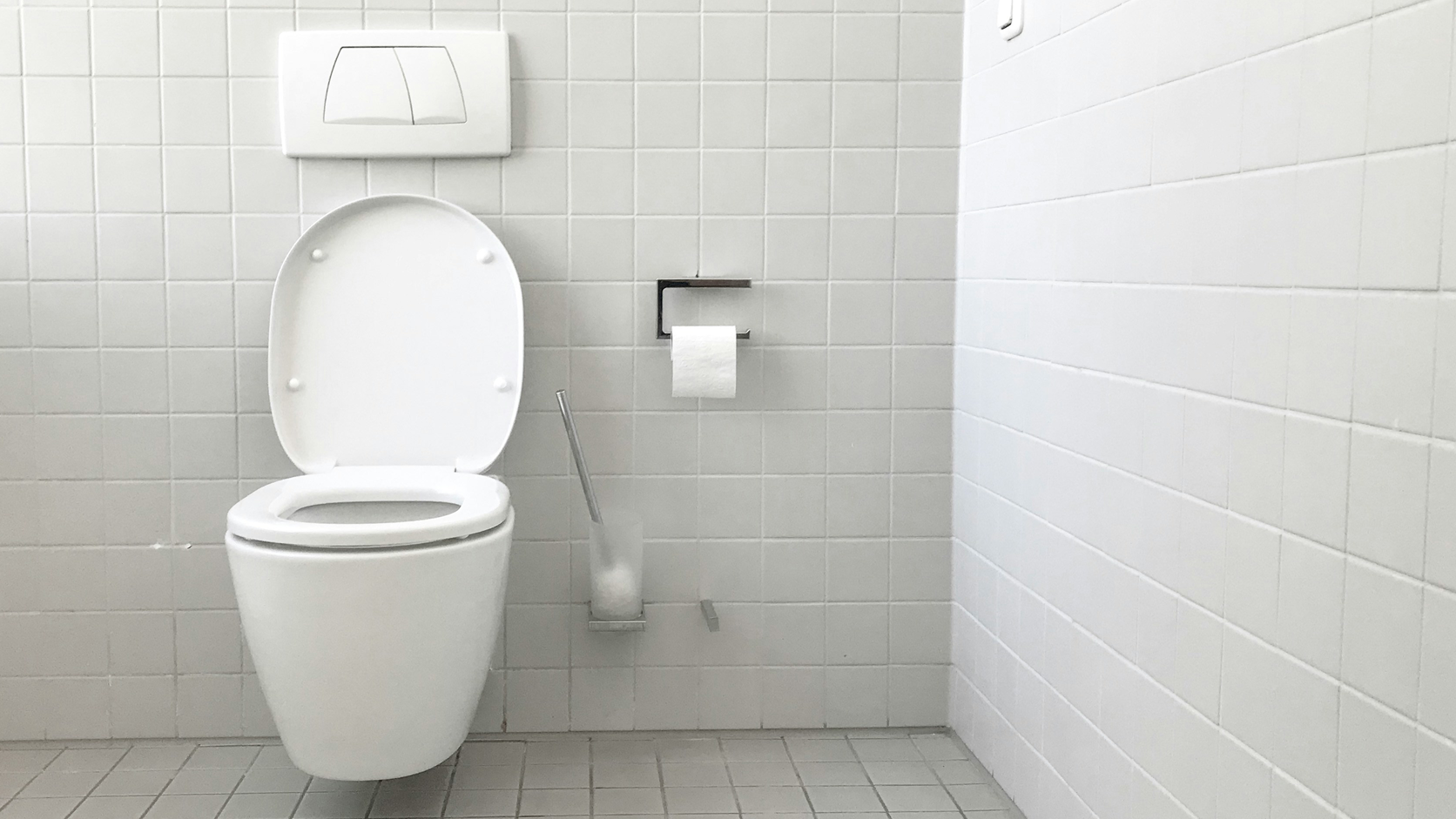
Bottom line, the family’s solid waste requires a double flush in both of the two bathrooms. That’s a bit of a red flag, particularly in a relatively new, three-unit condominium. Each bathroom has a wall-hung toilet and a concealed flushing system — meaning the toilet bowl is attached to the wall while the tank and much of the flushing mechanism are hidden inside it.
Sometimes a wall-hung toilet is preferred for aesthetic, space-saving, or hygienic purposes. Other times, it can be a requirement based on existing waste lines and plumbing configurations.
Whatever the reason, the low-flush situation wasn't isolated to one bathroom.
The toilets in both the en-suite bathroom and the guest bathroom required a second flush. This certainly shouldn’t be the norm, provided the solid-waste deposit is a “normal” amount. (For reference, a typical adult “deposit” is somewhere in the neighborhood of 150 grams, give or take.)
While wall-hung toilets are elegant creatures, they are not known for being more efficient than their free-standing counterparts. They can also be more complicated to repair, given that much of the system is concealed within the wall. Many components can be serviced through the opening behind the flush plate, but problems involving inaccessible connections, piping or the carrier itself can require opening the wall.
Now, before you worry that we’ve gone off on a plumbing tangent, we’ll bring it back to real estate, and here’s how.
Having something to offer
As the family’s agent, I had access to a resource that quickly took us from “Is this normal?” to “Here’s how we can quickly diagnose this issue.”
The building’s offering plan.
An offering plan is a disclosure document accepted for filing by the New York State Attorney General that sets forth the legal, financial, physical, and operational terms under which interests in a condominium or cooperative are offered for sale to the public.
During the course of the transaction, namely the due diligence process, we reviewed the offering plan, confirming that the specified features and fixtures of the unit matched what we saw during showings and, ultimately, at the final walkthrough before closing.
My clients also have copies, as do their real estate attorneys, although I don’t know how many lawyers get calls about plumbing issues. (There’s a lawyer joke in there somewhere.)
Anyway, I went back to the offering plan.
The offering plan specified the exact Duravit model, described as “vitreous china fixtures with siphon flushing action” and “water-saving performance standards.” By all accounts, Duravit is an excellent toilet.
That gave us our first useful piece of information: assuming there hadn't been an approved substitution during construction, we knew what toilet was supposed to be there and could then verify it against what was stated in the plan.
The flush plates, i.e., the buttons on the wall that instruct the tank to flush, appeared to be Geberit, another premium brand. This suggests that the concealed tanks and carriers inside the walls might also be Geberit, but this was not specified in the offering plan.
We were able to match the models specified in the plan with those actually installed. But did we glean any further insight?
As it turns out, yes.
Pressure-testing the problem
One of the first theories to pressure-test — pun intended — was the water pressure itself.
The offering plan says the building relies on normal New York City water pressure, reported at approximately 50 psi, to provide domestic water throughout the building. There is no domestic water tank or booster pump providing additional pressure to the apartments.
This raised another important piece to understand about a concealed-tank toilet.
The water used for a flush is already sitting inside the tank hidden behind the wall. Assuming that tank is filling completely, the building's incoming water pressure isn't directly providing the instantaneous force of the flush. It is primarily responsible for refilling the tank afterward.
So insufficient building pressure could potentially manifest itself as a tank that fills too slowly or doesn't fill properly. But simply saying, “The building doesn't have enough water pressure,” wouldn't adequately explain the problem without investigating what the concealed tank, aka the cistern, was actually doing.
Plus, the issue is happening in both toilets, meaning the problem is not isolated to one cistern in one toilet in one bathroom.
Two toilets, one problem
What’s the common denominator?
It’s pure speculation, but it could be that:
- Both concealed cisterns were configured with the same relatively low flush-volume setting
- There is an issue with the way the concealed system has been paired with the Duravit bowl
The problem could also be farther downstream, involving the sanitary piping or venting. If it’s a building issue, though, it could also be happening upstairs or downstairs, right?
Right.
Returning to the offering plan, we could also confirm what had been specified for the upstairs and downstairs apartments at the time of purchase. While their owners could have made changes since, the plan called for the same Duravit toilets and concealed flushing systems, providing a nearly perfect comparison group.
So one recommendation was simple: to the extent they were comfortable doing so, ask the upstairs and downstairs neighbors whether they have the same problem.
“Hey, how's the school year starting off?”
“Great!”
“Wonderful. Umm, by the way, how would you rate the performance of your toilets?”
Awkward.
But if identical toilets throughout the building all behave similarly, the common denominator starts pointing toward the specified fixture, concealed cistern, flush-volume configuration or a repeated installation condition.
If the neighbors have essentially identical equipment and their toilets flush beautifully, that's equally valuable information. It starts narrowing the investigation back to something particular to my clients' apartment.
In a three-unit condominium, your neighbors can represent a reliable control group.
This is gonna need more than a plunger
My recommendations didn’t end, of course, at “Ask the neighbors.” They are clearly going to need the help of a plumber, not just a dedicated real estate agent.
Conveniently, More For LES has NYC Service Pro, our by-recommendation-only service provider directory, which includes a list of plumbers — and other trusted professionals — from which to choose. I suggested that they look there, but I also provided a summary of the issue for them to share with their plumber, along with a few key questions:
- What manufacturer and model of concealed carrier and cistern are actually behind the wall?
- How much water is each cistern currently configured to release during a flush?
- Are the cisterns filling completely?
- Are the concealed systems, bowls and connecting components properly matched and installed?
- Is there anything about the sanitary or vent connections that could be affecting the evacuation of the bowls?
Wipe left
The takeaway here isn’t really about toilets. It’s about what client care looks like after the transaction is over.
Helping a client is not just a Before and During responsibility. It’s a long-lasting After, which is also how to ensure that they think fondly of you, remember you, and recommend you.
Referrals and repeat client business are the lifeblood of real estate. Missing the chance to provide valuable assistance, at whatever point in a client’s journey, is like flushing a future opportunity down the toilet… or stuffing it up.