

Renovation station. What's the hesitation?
The Upside and Downside to Apartment Renovations on the LES
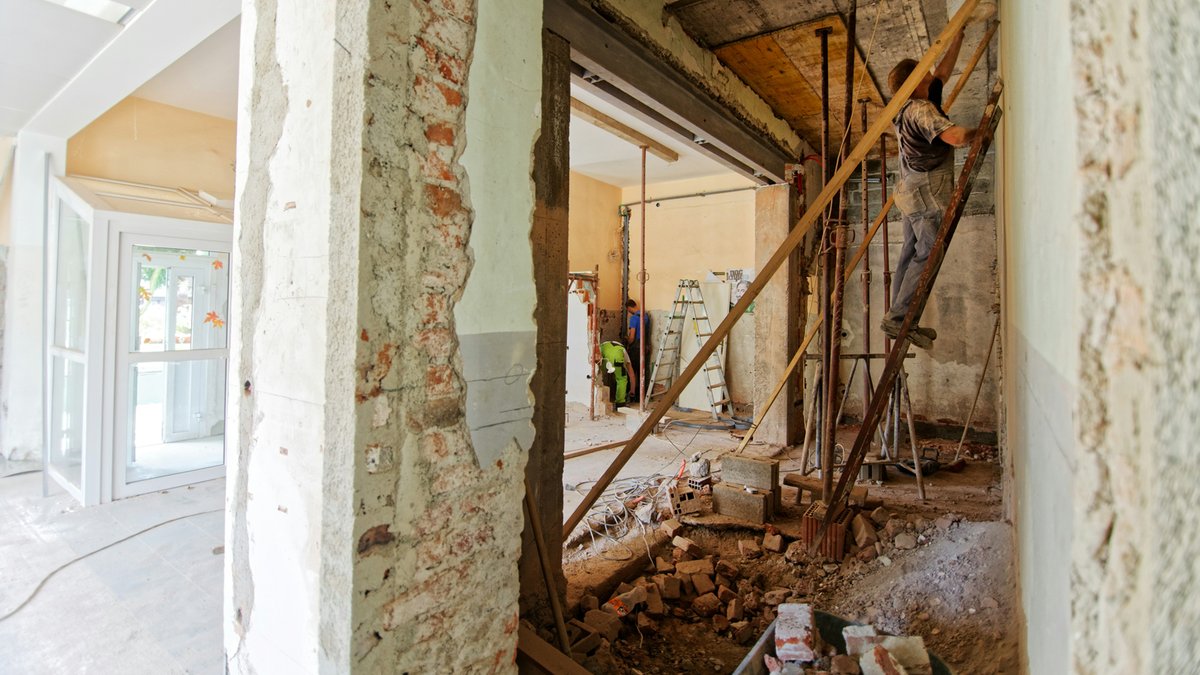
Have you ever considered the upside to renovating a Lower East Side apartment?
Forget about “flipping” it. When you run the math the bar is extremely high to have sufficient margin to make money in the short-term, especially within most of the larger co-ops like Seward Park, East River, and Hillman.
Between brokerage fees (~5% of the gross sale) , flip taxes (~5% of the gross sale, and more for original shareholders) , the mansion tax (for purchases above $1 million) , legal fees , and closing costs , both buyers and sellers have to account for “leakage,” so to speak.
Just the same, we wanted to test the hypothesis: Can a renovation actually pay off?
We analyzed 40+ properties across the 10002 zip code — co-ops and condos — that explicitly used the word “renovated” in their listing descriptions. We isolated units with multiple historical price points — typically a listing, a closing, a period off the market, and another listing. This allowed us to observe performance over time , make some assumptions about a unit’s renovation, and differentiate between indicators and outliers.
The TL;DR — for those short on time — is that renovation appears to function as a baseline for marketability, while performance is underscored by the hold period, layout, and building characteristics.
Essentially, the longer one holds, the better the return on investment , and the more “livable” the layout and the corresponding building, the more likely that a person’s investment will retain and increase in value . However, LES renovations — from modest updates to full guts — do not appear to favor the flipper.
Let’s look at some examples.
One Bedrooms
As we learned in our longitudinal study — 20 Years, 4 Co-ops, & 10002 — the Lower East Side has a ton of one-bedroom apartments. The units themselves appear to increase in value, but the benefits appear to favor the buyer — not the seller.
210 East Broadway #H1305 (Seward Park)
Earliest listing: $429,000 (2006) → Current listing: $719,000
Notable here is that the unit is marketed as having a “renovated” kitchen , but the original parquet floors suggest that the updates are only partial. Even more illuminating, the kitchen appears unchanged from an earlier sale at $535,000, indicating the renovation likely predates the current owner.
This unit’s 67% appreciation since 2006 is driven by market forces and typical growth cycles for NYC real estate. Putting any renovation aside, breaking $700,000 on this unit is merely a good outcome — not a great one.
500 Grand Street #BGB (Hillman Housing)
Earliest Listing: $315,000 (2014) → Current listing: $499,000
This unit is a studio that’s been tastefully converted to a 1BR , and not without love and care . Other than the radiator covers and the bathroom , everything — from the floors to the accent walls to the appliances — appears to have been updated.
Just the same, from one period, to the next transition, to the current state, it’s clear that shareholders have attempted improvements only to see modest growth relative to their investment .
Two Bedrooms
The two-bedroom category promises the most upside , whether it’s because of supply-demand dynamics or whether it’s just a “safer” bet.
387 Grand Street #K707 (Seward Park)
Earliest Listing: $720,000 (2008) → Current listing: $1,498,000
This unit, which is undoubtedly appealing , suffers from one of the issues raised in our recent piece about breakthrough apartments: the aesthetic is particular , and requires a buyer with similar taste.
It came onto the market back in 2008 and changed hands in 2016 . The pre-2016 version clearly served a different type of occupant to the current shareholder, who bought for $1,050,000. The unit is currently priced under $1.5 million. Consider the time value of money , a renovation , and the fact that this property is still available suggests that there is margin for the current shareholders — provided they sell soon and can bear carrying an empty apartment.
577 Grand Street #F504 (East River)
Earliest Listing: $460,000 (2012) → Current listing: $850,000 (Under Contract)
From our data set, this unit could be the top performer for the selling shareholder(s) . It’s under contract as of this week , so let’s assume it went within 5% of the asking price ($850,000).
The renovation — which touched the walls and the kitchen , but not the floors — occurred sometime within the past 14 years. This suggests that the property appreciation is tied to broader market growth — particularly in the run-up between 2016 and 2019 — and not to the renovation itself. Since the seller has held the property for more than a decade, the 80%+ gain will feel significant.
This, to borrow a term from Scott Galloway, is the “unlock.”
Three Bedrooms
At the three-bedroom level, the situation is a bit of a wildcard . Here’s what I mean:
530 Grand Street #F8H (Hillman Housing)
Purchased: $1,300,000 (2015) → Current listing: $1,295,000
This is an interesting one . The unit has been renovated, though not fully, i.e., at least one bathroom appears unchanged from the 2016 sale , while the floors, living spaces, and cabinetry were more comprehensively updated.
It sold in 2016 for just under $1.2 million. Now, though, the ask appears to have been closer to $1.4 million, but has been reduced to under $1.3 million . Some of the pricing pressure may be attributable to Hillman, which tends to trade at a discount relative to nearby alternatives at similar price points.
Despite what is indicated above for two-bedrooms, this three-bedroom also reflects a 10-year hold with a possible gain of less than $100,000. Given what was invested for the renovation , this unit will go for a loss.
266 East Broadway #B1406
Purchased: $1,300,000 (2015) → Current listing: $1,750,000 (Under Contract)
How about a bit of an anomaly? This unit was purchased in 2024 for $1.3 million and underwent a full renovation — floors, walls, appliances, and a reconfigured layout.
In early 2026 it listed at $1.75 million and, from known accounts, went to contract for over $1.8 million . While the timeline suggests a quick flip, that’s not the full story. Regardless, the buyer is acquiring a near-pristine, fully renovated apartment that has likely only been lived in for a year to a year and a half.
For the seller, though, the net proceeds are predicated on the recent renovation cost which was not done on the cheap . What it does, though, is achieve a new benchmark for “true” 3BRs in Seward, pushing the ceiling higher for shareholders .
Takeaways
To put a finishing point on this story: renovations in New York City — and the LES, in particular — are for the person or people living there. (This is the upside.)
While some markets reward flipping , New York City generally does not. On the Lower East Side — unless you are willing and able to hold for 15+ years — upgrades should be made to enhance how you live , not to chase a return. The market may reward you if timing aligns, but there’s no guarantee your taste, costs, or investment will translate into a profit.
You may also enjoy

Is the path to an NYC condo renovation different from a co-op?
Learn the differences between co-op and condo renovations, including approvals, permits, alteration agreements, and board oversight on the Lower East Side.