
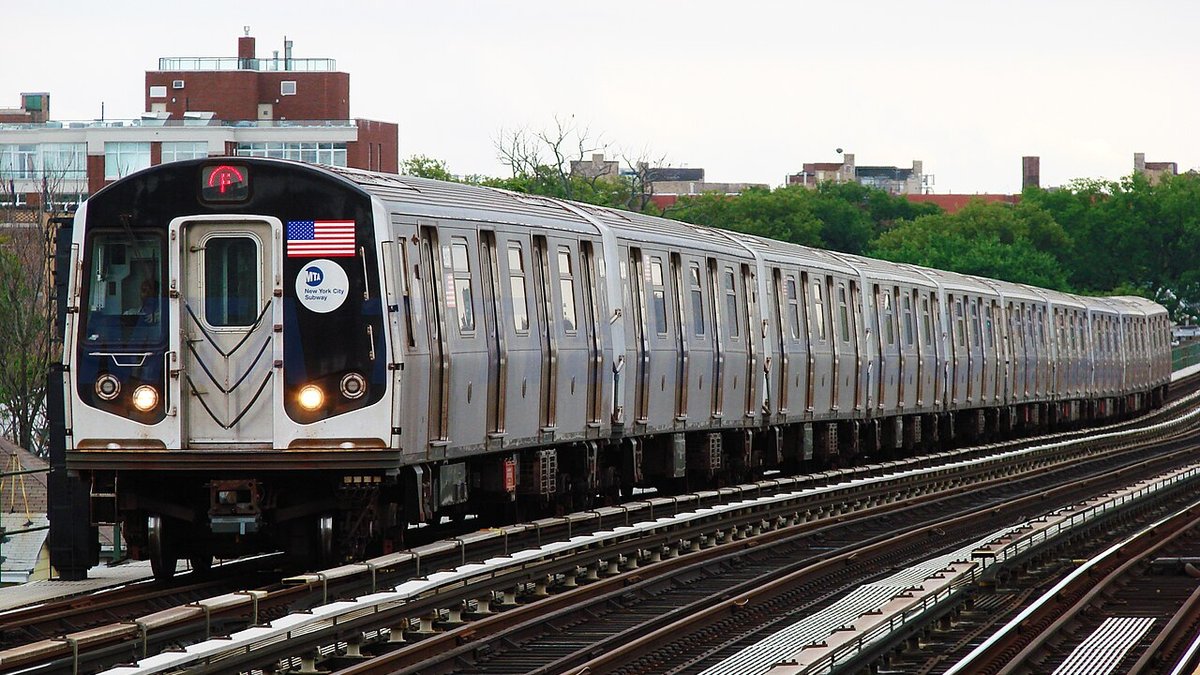
Pardon the interruption. Our train is being held between Princeton Junction and Hamilton
2025 NYC Mayoral Election
Today, the Thomases…
“Attention, this is your conductor speaking. We are being held here between Princeton Junction and Hamilton to let a southbound Amtrak pass us.”
Correct, I did say that the Real Garden Estate Adventure would not have any delays or commute hiccups, but today is Election Day and there’s a big one happening in New York City — one that will have real estate implications. So, we’ll return to the Thomases tomorrow.
The 2025 New York City mayoral election features three candidates — Zohran Mamdani, Andrew Cuomo, and Curtis Sliwa — each with distinct views on real estate development and housing. Here’s a synopsis of their platforms as they pertain to real estate and housing, along with their implications for key constituents.
Zohran Mamdani (Democratic Socialist)
Mamdani’s platform is centered on massively expanding public and permanently affordable housing and fundamentally shifting the city’s approach away from relying on private, market-rate development and corporate landlords. He advocates:
Massive Public Housing Production: Proposes the city take the lead in housing production, building 200,000 new, permanently affordable, union-built, rent-stabilized homes over 10 years, paid for with public dollars (e.g., higher taxes on the wealthy).
Fast-Track 100% Affordable Projects: Any development that is 100% affordable would be fast-tracked through the approval process.
Tenant Protections: Advocates for strengthening tenant rights and expanding rent stabilization.
Anti-Corporate Focus: Aims to reduce the influence of private developers and large real estate interests in the city’s housing strategy.
Constituent >>> Implication
Developers >>> Negative: Platform is explicitly anti-developer-centric, shifting production to the public sector. Union labor-focused builders could benefit by being involved in the new city-led projects.
Landlords >>> Negative: Supports strengthening rent stabilization and tenant protections , which limits landlord profits and control over their properties.
Tenants (Rentals) >>> Positive: Proposes a huge increase in permanently affordable and rent-stabilized units , directly addressing the affordability crisis and increasing housing security. (Note that prospective tenants would have to meet the affordability standards.)
Owners/Shareholders >>> Mixed: No direct policy benefit, but could stabilize or lower neighborhood housing costs by increasing affordable supply. At the same time, owners may face higher taxes if paying for public housing.
Andrew Cuomo (Independent)
Andrew Cuomo, a former New York State Governor, has historically focused on large-scale infrastructure, public-private partnerships, and state-level housing initiatives with a moderate approach to development. He carries scandal and baggage, but also executive experience. Past examples of his initiatives include:
Large-Scale Infrastructure: Focused on using state power and financing for massive development projects (e.g., Penn Station redevelopment, airport upgrades).
Affordable Housing Programs: Implemented multi-billion dollar, multi-year state programs to create and preserve affordable and supportive housing (e.g., the 5-year, $20 billion housing plan). These often rely on tax incentives for private developers.
Public-Private Partnerships: Favors collaboration between the public sector and private developers to achieve housing and infrastructure goals.
Constituent >>> Implication
Developers >>> Positive: Favors large-scale projects and tax incentives (like the state’s 421-a tax abatement) which are essential for private, mixed-income housing production .
Landlords >>> Neutral: Provided state funding for affordable housing preservation , which benefits some non-profit and mission-driven landlords , but also signed some significant tenant protection legislation as Governor.
Tenants (Rentals) >>> Positive: His programs increased the supply of state-subsidized affordable and supportive housing units . However, his approach did not prioritize the deepest affordability levels .
Owners/Shareholders >>> Neutral: Stability from large-scale investment and a focus on economic growth and infrastructure improvements .
Curtis Sliwa (Republican)
Sliwa’s platform primarily focuses on reducing taxes, eliminating regulations, and restoring local community control over zoning and development, generally opposing large, city-led rezoning efforts. Sliwa is a perennial candidate, a radio host, and the CEO of the Guardian Angels. His platform, relative to real estate, includes:
Tax Relief and Regulation Cuts: Seeks to lower the tax burden on multi-family rental housing and end what he calls “anti-landlord laws” to encourage housing supply.
Anti-City of Yes: Opposes broad, city-initiated rezoning like the current administration’s “City of Yes” which encourages density. Advocates for restoring local zoning control.
Convert Vacant Space: Supports converting commercial spaces (hotels, offices) into housing and rehabilitating vacant, existing housing stock (like rent-controlled apartments) to increase supply.
Support for Small Landlords: Wants to adjust tax codes like 421-a to help small landlords create housing, rather than primarily benefiting high-rise developers.
Constituent >>> Implication
Developers >>> Negative: Supports commercial conversions and regulatory cuts , but his emphasis on local zoning control and opposing large rezonings creates uncertainty and potential hurdles for large-scale development. He favors small-scale, non-luxury developers more.
Landlords >>> Positive: Explicitly advocates for lowering taxes on multi-family housing and repealing “anti-landlord laws” , which would improve their profit margins and operational flexibility .
Tenants (Rentals) >>> Negative: Strong pro-landlord stance and opposition to strengthening rent control could lead to higher rents and less protection from eviction . The reliance on conversions may not meet the scale of the affordability crisis .
Owners/Shareholders >>> Positive: Appeals to homeowners (especially in lower-density neighborhoods) by promising to restore local control over zoning , protecting neighborhood character , and potentially ending “unfair property tax hikes” .
Who’s good for 10002?
Putting aside the respective candidates’ positions outside of real estate — an impossible task, since nothing exists in a vacuum — it depends on where and how you rest your head.
The Lower East Side’s population has a fair (if not disproportionate) share of people reliant on public assistance who would undoubtedly benefit from rent freezes. Mamdani will advocate strongly for these constituents, re: Tenants (Rentals), which is one of the reasons our city councilman, Christopher Marte, has endorsed him.
Developers and Landlords will benefit more from Cuomo or Sliwa, but the latter trails (and isn’t likely to win). It’s hard to see how these constituents would benefit from a Mamdani mayorship, although if Zohran wins it could force them to get more creative about how and where they develop—including how they approach partnerships with the city and how more of its lower income population can benefit.
Owners/Shareholders have plenty at stake. Isolating only real estate is unfair, as issues of public safety, antisemitism, and education are all lightning rod issues and impact them because, for the most part, they live in 10002. From a strictly real estate vantage point, i.e., which candidate(s) will better protect their existing investments, the voting choice is Cuomo or Sliwa.
That stated, people who live in New York are rarely single issue voters. This election is about more than just real estate.