
The Good, the Vlad, and the Ugly
The Vladeck Houses
Having lived the better part of a decade on the Lower East Side — specifically in the East River Co-ops — raising kids who attend school locally and spending countless weekends coaching baseball at Corlears Hook Park, I’ve passed by and through Vladeck Houses more times than I can count.
As an outsider, the six-story complex has always intrigued me .
There’s a visible heterogeneity in the makeup of its residents — both in terms of backgrounds and ages — which provides a living snapshot of the Lower East Side itself . In many ways, Vladeck reflects the neighborhood’s patchwork of sub-communities, including several NORCs — Naturally Occurring Retirement Communities — where long-time residents age in place and services are designed to support a wide and often elderly population.
The Vladeck Houses are a NYCHA-operated public housing development, meaning residency is income-qualified and rents are set as a percentage of household income.
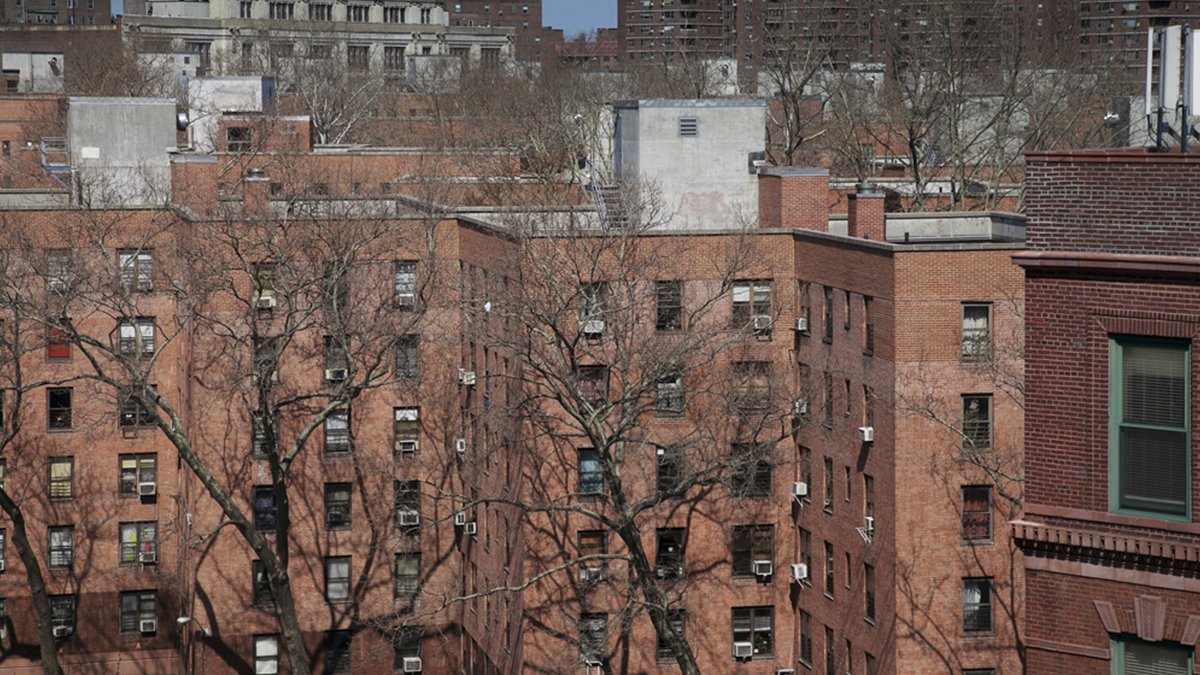
Living above it, my apartment looks out over the grounds . I’ve had a firsthand view of the complex’s various maintenance and upkeep projects, including a roof renovation and tree removals . All of it has stayed with me, along with the residents I’ve met, which ultimately prompted me to take a closer look .
Background
Long before the Vladeck Houses came to be, this area was Corlears Hook: first Indigenous land, then a Dutch farm granted by Peter Stuyvesant, later a battleground during the Revolutionary War , and briefly, in the early 19th century, one of Manhattan’s most fashionable residential districts.
By the late 1800s, the neighborhood had become something else entirely. Catastrophe abroad — Irish famine, Italian agricultural collapse, German political upheaval, and Russian and Polish pogroms — sent waves of immigrants into Lower Manhattan. Corlears Hook lured people in because of its proximity to the docks , but it increasingly trapped them, keeping residents away from safety, health, and opportunity.
As people multiplied, so did the tenements that held them . Railroad flats, dumbbell buildings, converted mansions, and rooming houses filled nearly every inch of land. Interior rooms had no windows or light. Toilets were shared. Fire escapes were often illegal, wooden, or nonexistent . Children frolicked amidst dangers and hazards. Eventually, transportation infrastructure bypassed the neighborhood, parks rotted and decayed, crime proliferated, and the waterfront was walled off by warehouses and piers.
Enter, the Complex’s Namesake
Baruch Charney Vladeck was a reformer . He lived and worked on the Lower East Side, knew its residents personally, and knew how to relate to them. Born in Russia, Vladeck was imprisoned for revolutionary activity before escaping to the United States in 1908 . Once on American shores, he became a central figure in Jewish labor, socialist politics, and progressive reform.
Vladeck became general manager of The Jewish Daily Forward — whose building is still standing on East Broadway — and later a member of the New York City Board of Aldermen and the original board of the New York City Housing Authority. He spent decades pressing for dignified housing as a public obligation , introducing legislation urging the state to allow New York City to build low-rent housing. Long before federal subsidies existed, he argued that slums were not a moral failure of individuals, but a structural failure of cities.
In 1938, Mayor Fiorello H. LaGuardia announced that New York would begin its first municipally subsidized housing project — on the Corlears Hook site . As fate would have it, Vladeck died the day after the announcement, and the project took his name — both as a culmination of his life’s work and as a memorial .
A New Model for Housing
The Vladeck Houses were conceived during a moment when the government believed it could — and should — build its way out of urban blight . (Nearly 100 years later, people are now polarized on the issue.) In cooperation with the federal government, the New York City Housing Authority (NYCHA) demolished more than 170 deteriorated buildings and followed up swiftly with an ambitious wave of construction.
Completed in late 1940, the Vladeck Houses consisted of low-rise, six-story, fireproof brick buildings arranged across landscaped open space . This was the proverbial “up yours” to the packed tenement block. Apartments were modest but revolutionary by neighborhood standards: private bathrooms , central heat, electricity, refrigerators, gas stoves, real kitchens, elevators, and windows in every room . Laundry facilities, playgrounds, green space, and community rooms were also incorporated into the plan.
To counteract tenement density, Vladeck’s landscape was only lightly freckled with buildings. Light, air, and visibility were treated as public goods , with design emphasizing function over fancy. Tenants — nearly one-third of whom had been displaced by demolition — were overwhelmingly working households, including chauffeurs, garment workers, clerks, bakers, barbers, and shopkeepers .
For a time, resident life in Vladeck was unquestionably an upgrade . It was safer, cleaner, and more spacious, suggesting that the government could successfully run such a project and deliver better outcomes for its people.
A Distinctly Downward Descent
Over the next eight decades, New York City changed. Along with it, public housing policy did, too.
Tenant selection rules loosened. The population grew poorer and more dependent on public assistance. As the Bronx burned in the 1970s , the Lower East Side broke. Vandalism, drugs, and violence strained both residents and infrastructure. Despite this, NYCHA endured, keeping up with maintenance requests and security issues.
By the late 1990s and into the 2000s, public housing entered an era of systematic disinvestment . Federal funding declined, shifting proactive operations into reactive mode — meaning preventive measures were shelved in favor of fixing things after they broke. Buildings aged, boilers failed, elevators broke, mold spread, and people sat around waiting — for days or months or even years — for repairs.
By the 2010s, residents of the Vladeck Houses reported chronic heat outages , delayed repairs, safety concerns, and poor communication with management. Scandals involving corruption and mismanagement further eroded trust, with NYCHA admitting it had falsely certified compliance with federal lead-paint inspection rules for years, along with other regulatory failures. This led to the resignation of then-chairwoman Shola Olatoye, a federal settlement, and cemented public perception of the agency as mismanaged and insufficiently transparent.
Despite all of this, targeted improvements did occur: senior centers expanded programming , ramps were rebuilt, lighting and surveillance increased , and parks like Vladeck Park continued to provide communal space .
Vladeck Today
Depending on your vantage point, the Vladeck Houses are either a symbol of public development or decline . They are the physical record of a time when New York believed housing was a public responsibility. They are also a case study in what happens when long-term stewardship is sacrificed.
Named for a man who believed that decent housing was foundational to democracy , the Vladeck Houses still shelter thousands of New Yorkers. They continue to pose an unresolved question that remains as urgent now as it was in 1938: What does a city owe the people who serve it, yet are stuck within it?
Sources:
You may also enjoy

Can one agent work for both the buyer and seller?
Learn how dual agency works in New York real estate, what informed consent means, and how representing both buyer and seller can limit an agent’s role.