

Mine's bigger than yours
The Manhattan of British Columbia
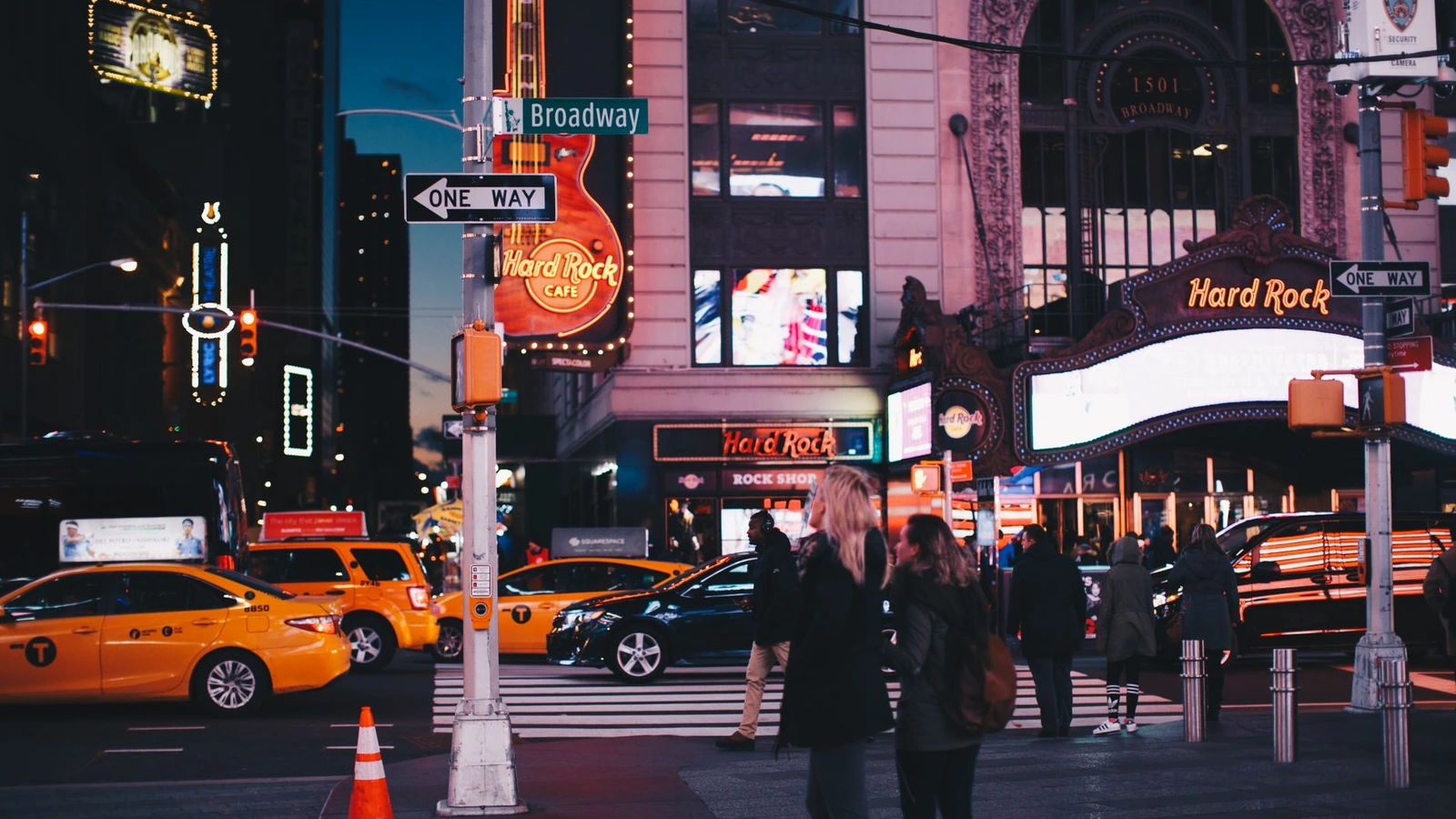
When people talk about cities with New Yorkers, it’s common to hear this comparative phrase: “It’s the Brooklyn of {City}.” Such comparisons are useful inasmuch as we understand what’s being expressed: “This city is cool but it’s not Manhattan.”
But, before we get into Brooklyn shade-throwing, this article is not about the Urban Apples-to-Apples Game. It’s about looking outside of New York City for examples that address — and even solve — issues found within the five boroughs.
Not long ago, there was discussion around New Rochelle and how it tackled rising housing costs and short supply. In 2015, it adopted a Downtown Overlay Zone, selected a master developer, transitioned to a form-based zoning code, and completed a district-wide environmental review that significantly shortened project approvals. Since then, New Rochelle has approved dozens of projects and added more than 6,000 apartments, with zoning capacity for thousands more. This city’s initiative is often cited as an example of how coordinated planning and community support link housing production with transit and infrastructure.
Two weeks ago, I came across a New York Times article looking at a very different success case: Vancouver, British Columbia.
Have you ever been to Vancouver?
It’s beautiful. It’s coastal. Like New York.
It’s geographically concentrated. It has restrictive zoning and land use laws. Like New York.
It’s also part of another country, with its own distinct geography, politics, and history. But, it’s also “the Brooklyn of Canada” — said no one, ever.
The article focuses on the Squamish Nation and the development known as Sen̓áḵw. (Here’s how you pronounce that: Sen̓áḵw.)
The Canadian government returned ten acres of land to the Squamish Nation after a long legal process recognizing the Nation’s claim to the property. Rather than leaving the land undeveloped, the Squamish chose to build one of the densest residential developments in Canada: a 6,000-home project across eleven high-rise towers. This is particularly unique in a city like Vancouver, where large portions of residential land remain devoted to single-family homes — not to mention an astute business decision for the Squamish Nation, as this initiative (if successful) will monetize the property.
Supporters point to several reasons for this approach. Higher-density communities generally require less energy per resident, reduce dependence on automobiles, and allow more people to live near jobs, services, and transit. (Hello, New Rochelle!)
Density also creates opportunities for commerce, creativity, and community. Sen̓áḵw, specifically, is designed as a walkable, sustainable neighborhood and incorporates environmental features intended to reduce its carbon footprint.
The project has also generated criticism. Some nearby residents object to the scale and density of the buildings. Others dislike their appearance or oppose the development altogether. (Hello, any new housing development conversation in New York City!)
For the Squamish Nation, however, the project also represents a long-term economic opportunity. The development is expected to generate substantial revenue while adding thousands of homes to Vancouver’s housing supply.
The New York Times presents Sen̓áḵw as an example of how cities — New York included — might think differently about housing. Beyond the fact that Sen̓áḵw is built on repatriated Indigenous land under a distinct legal framework, of which there is no direct equivalent in New York City, it would be tough to see this model transplanted to New York, let alone the Lower East Side.
One of the ideas discussed in Mayor Mamdani’s Block-by-Block housing plan is the redevelopment of publicly owned surface parking lots for new housing. Herein lies the potential comparison to Sen̓áḵw, as the land upon which to develop would likely be reclaimed from somewhere, somehow. On the Lower East Side, the most obvious candidates are surface parking lots associated with public housing campuses, particularly those operated by NYCHA.
These sites, though, are in active use. Redeveloping them would certainly generate debate. Residents depend on many of these parking facilities, and replacing parking with additional housing would prove controversial. Likewise, constructing new buildings within existing public housing campuses would raise questions about density, infrastructure, open space, and quality of life.
The accompanying map identifies several publicly owned surface parking areas that could conceivably become part of future redevelopment discussions. Other parking lots exist throughout the neighborhood but are privately owned or otherwise unlikely to be available for housing and therefore are not included.
As it stands, parking lot reclamation probably doesn’t work. Something akin to what’s happening in Chelsea, though, with the Fulton and Elliott-Chelsea Houses, could. This project involves constructing new residential buildings while gradually relocating residents from older buildings into newer ones over time. The process will modernize housing stock while minimizing permanent displacement; however, it will happen over a gradual period of time.
Perhaps there’s something there for the “Manhattan of British Columbia” to learn.