
I'll see what she's painting
New York Artists Equity Association & Equity Gallery
When people think of the Lower East Side, they often default to a moment, a period, a wave, a cohort, or a scene. (Like this.)
Of course, not everyone “has what she’s having,” nor should we be flippant or reductive. The point is, we all have ideas about the Lower East Side and associate it with what’s familiar. Sometimes it’s the people. Sometimes it’s the place itself. Sometimes it’s more abstract, like a shared idea that blends or distorts People and Place. (By today’s terms, we might capture it in meme form, per my creation below.)
Both People and Place are essential to continuity and culture, but the Lower East Side’s institutions, frequented and supported by residents and visitors, provide the context for transgenerational dramas to play out.
Take the New York Artists Equity Association (NYAE), a nonprofit founded in 1947 during a particularly volatile moment in time for artists. The economic support afforded to artists during the New Deal era began to recede. As a result, prominent artists of the day — the likes of Jacob Lawrence, Louise Nevelson, and Edward Hopper — came together and created the NYAE as a way of ensuring and protecting the viability of art as a profession, as well as the dignity of working practitioners.
From the outset, NYAE was more of an advocacy body than a gallery. It addressed issues like exploitative practices, the absence of health coverage for artists, and constructed a network to link artists with collectors, curators, and art-related organizations. That DNA still holds, although the New York chapter splintered from the national organization in 1965, eventually establishing a permanent home and local vision.
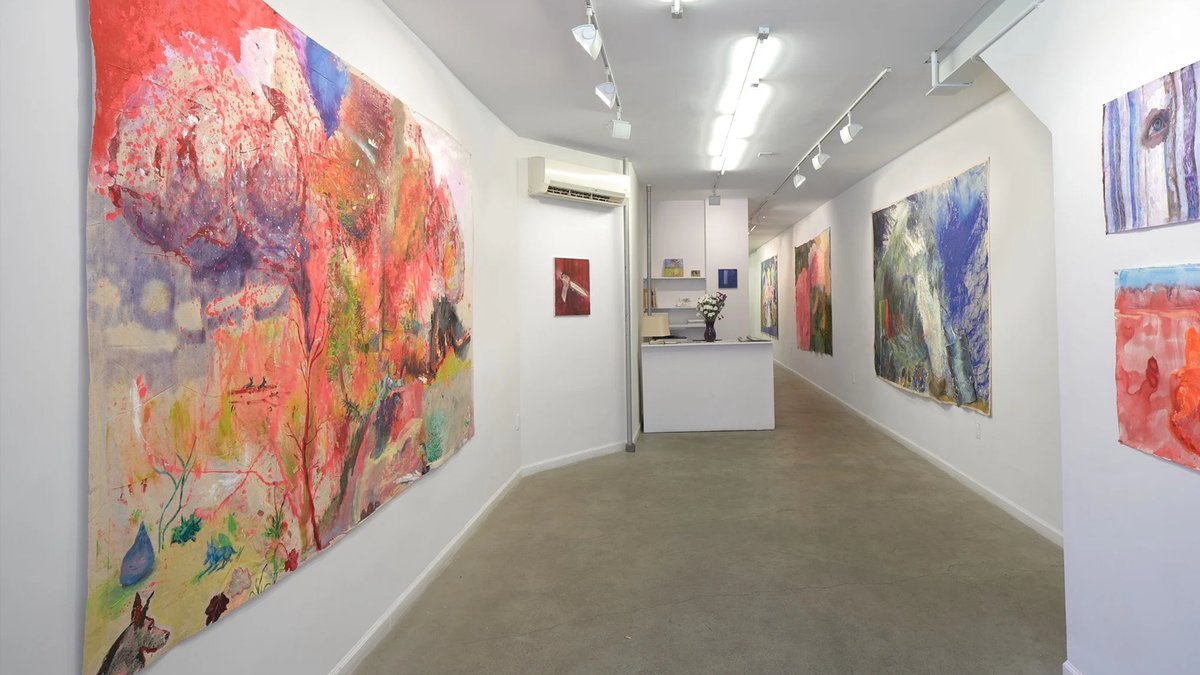
In 2015 the Equity Gallery opened on Broome Street, giving a physical presence to reflect its ideals. Today, it operates less as a commercial showroom and more as a hybrid exhibition venue and community hub, prioritizing underrepresented voices and professional development. This latter part is important, i.e., the artists connected to the Equity Gallery tend not to be the “finished article,” often on the path toward progress and maturation as professionals rather than recognized veterans.
This, of course, is where I bring everything together.
Being a Lower East Side resident, I often come into contact with impressive and talented people, finding out that one person knows another and then seeing those relationships unfurl. Natalie Kates, who owns a nearby gallery, is one such person. She introduced me to a local artist, Siyan Wong, who also lives nearby.
An attorney-turned-artist, Ms. Wong’s path is unique, having focused on a constant subject through differing lenses. As a workers’ rights attorney, she came into direct contact with the very people who now populate her canvases — immigrant Chinese women working in garment factories, restaurants, home care, and street-level economies.
Her current exhibition, Mother Warriors, is on view at the Equity Gallery through April 11. I encourage you to stop by. If you live locally, you may recognize the people or the scenes she captures. You may even gain a deeper understanding of the Lower East Side through a moment, a period, a wave, a cohort, or a scene on canvas.