

You’ve Got Mail! Building a Direct-Mail Campaign From Scratch
A LinkedIn Original Publication

I am not well enough known.
That’s not an insecure remark escaping from the depths of my ego. It is, however, a constant source of tension for me.
I am an entrepreneur, and I am one who must be better known in order to succeed. I have to be thought of highly — as well as first — by more of the right people, people who will come to me directly or who will pass my name on to friends and loved ones. Referrals are the lifeblood for many in professional services, and in real estate, in particular.
Buying, selling, or investing in property is a major financial decision relative to almost anything else people purchase. It involves considerable thought, deliberation, evaluation, and emotion — and often some procrastination.
These decisions are neither insignificant nor entirely rational. They also don’t happen often. In New York, the tenure of homeowners is somewhere around 10 years, so the chances of working with the same client multiple times is rare.
When people are ready to act, though, they want to work with someone they trust. To be trusted also means to be known.
Until a business becomes a dominant player in its market — or develops a sufficiently large client base to subsist primarily on referrals — a newer brand, like More For LES, has to prioritize prospecting over retention. It has to find people who might benefit from its services and, among them, those willing to consider a name that may not be the most familiar in the target market.
I’ve often worked through this challenge in previous roles as a CMO and CRO. We would start with a revenue target and work backward to determine how much pipeline we needed, how many prospects had to enter that pipeline, what percentage might convert, and how much we could afford to spend acquiring them.
I am now performing the same calculation for More For LES as we look to build name recognition and engage with prospective clients who might be considering a purchase, sale, or investment. Actually, I’m not performing the calculation: I’m standing by to measure the effectiveness of our first direct mail campaign which went out last week.
1,954 postcards delivered across three postal carrier routes to residents of Peter Cooper Village.
In this edition of the More For LES LinkedIn newsletter, I will provide the backstory and breakdown. (And, if you want to see the final output, scroll to the bottom to see the finished postcards.)
First, why Peter Cooper Village?
Part of the founding story of More For LES is that I fell in love with the Lower East Side after living in New York City for more than 25 years.
Immediately before moving here, my wife and I lived in Peter Cooper Village, within the broader Stuyvesant Town complex.
We were incredibly happy there. We had our first son while living in Peter Cooper Village, and it was a magical time. I have countless videos of myself walking with him in a stroller or carrying him while singing, sitting beside the fountain in the Oval, and watching him stare up at the canopy of trees above those immaculate, carefully maintained grounds. I filmed his first steps on Playground #2.
When our second son came along, we faced a decision: Continue renting, only in a larger apartment, or make a more consequential move and buy a home.
With Peter Cooper Village offering rentals only, we ultimately chose to buy.
Fast forward to the present, as I considered my options for an outbound marketing campaign, I thought back to my family’s experience in Peter Cooper Village and how and why we decided to relocate to the Lower East Side.
My hypothesis?
Current residents of Peter Cooper Village may be approaching or experiencing the same inflection point as we did. They may have similar sensibilities: they may value proximity to the East Village or nearby bus routes; find green space, courtyards, and waterside park access appealing; and wish to remain in Manhattan but not have the budget for some neighborhoods in the borough.
Further, they might not know about or be considering the Lower East Side, and could benefit from working with someone who understands the before — and after — of what they are going through.
This target audience segment is broadly what marketers call an Ideal Customer Profile (ICP), although the really good ones underpin the ICP with extensive demographic and psychographic data.
Does Stuyvesant Town fit into the hypothesis and its residents into the ICP?
Generally speaking, yes. But Peter Cooper Village seemed like the more logical place to start. Its apartments are larger than those in Stuyvesant Town, and its residents are often paying higher rents because of that additional space. If their families are growing — or if they are simply beginning to question how long they want to remain renters — they may be considering what comes next.
And they may not know that they can find an extraordinary neighborhood with wonderful schools, houses of worship, delicious restaurants, active nightlife, vibrant and lush parks, and a remarkable multigenerational and multicultural community — all within walking distance of where they already live.
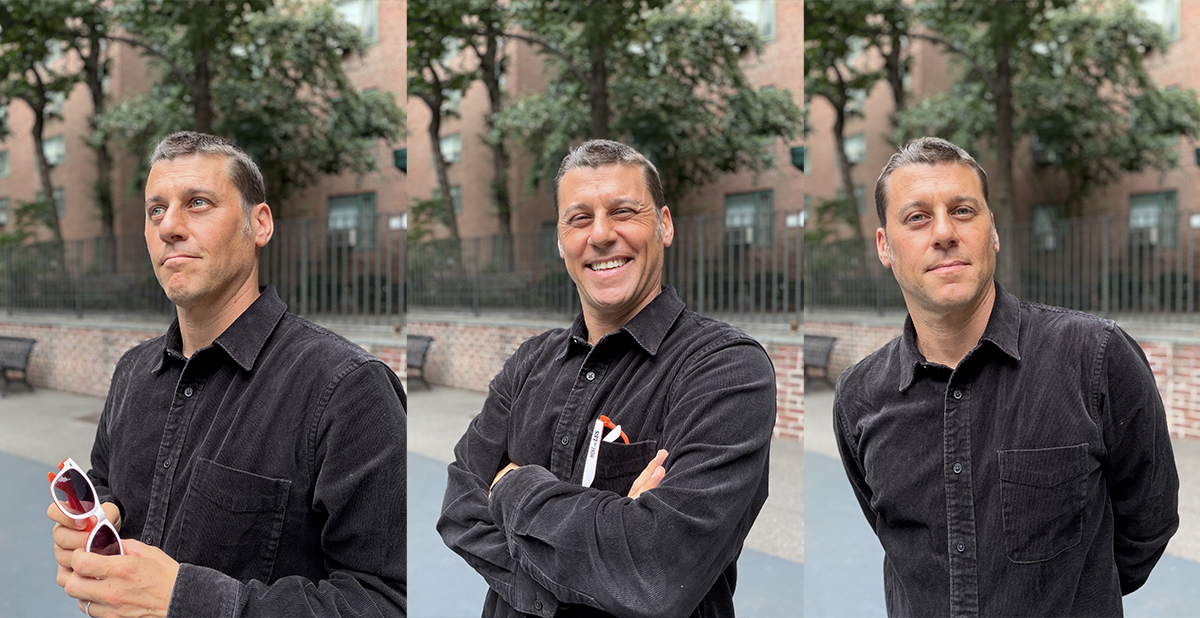
So I decided to appeal directly to them with a scenario that might resemble their own.
Dialing in the message
In considering a direct mail campaign, I revisited a conversation I’d had with a mentor the month prior. He’d suggested what I’d call the Real Estate Viking approach: going analog via direct mail, but targeting people closer to home with something akin to a proverbial shot across the bow of other local real estate agents.
That’s not really my style. More importantly, it wouldn’t address the strategic opportunity I saw.
Many people who already live on the Lower East Side are settled here. If they are contemplating their next move, that move could just as easily take them away from the neighborhood. Rather than using direct mail primarily to reinforce my name within the neighborhood, I chose to target Peter Cooper Village, another neighborhood, specifically.
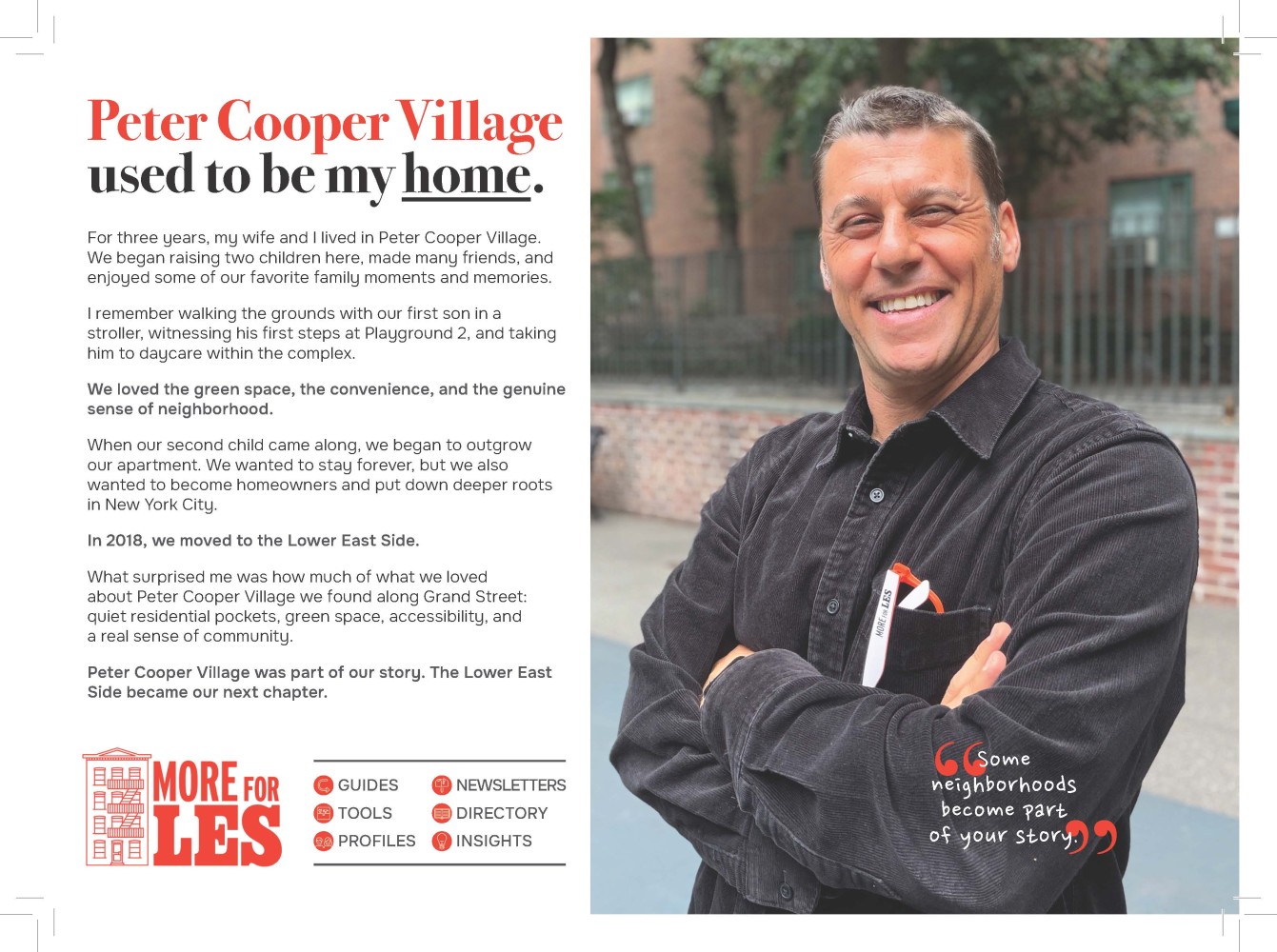
The mailing would not lead with a sales pitch. It would tell a personal story: we loved living in Peter Cooper Village; our family grew; we wanted to become homeowners without surrendering the sense of community we valued; and that journey brought us to the Lower East Side.
The message was simple: I’ve already taken the journey you may be beginning to consider.
I wanted the postcard to feel less like a conventional real estate advertisement and more like a personal note from a former neighbor.
Deciding what I wanted to say was only the beginning.
Lock, (paper) stock and two types of coatings
With the concept in-mind, I started researching direct-mail companies under the assumption that I would provide the creative — which I could handle given my background — and the vendor would print the piece and manage its distribution through the U.S. Postal Service’s Every Door Direct Mail program, better known as EDDM.
I investigated quite a few providers and discovered an unfathomable range in both their services and pricing.
Some offered creative services I didn’t need. Some bundled printing, sorting, postage, and delivery. Others separated those services. The printing options included different dimensions, paper stocks and thicknesses, full-color or limited-color production, glossy or matte finishes, and various coatings.
I tried to conduct the classic apples-to-apples comparison. The problem was that almost every quote contained a different kind of apple.
One vendor quoted one quantity; another quoted a different quantity. One specified 16-point cardstock; another proposed something thinner. Some included a glossy finish, some offered UV coating, and others left the finish unclear. Certain companies priced the mailing work into the quote, while others separated postage and fulfillment.
All of this made it difficult to determine not only which option offered the best value, but what the finished product would actually look and feel like.
That mattered to me. So did the cost.
I was targeting a run of roughly 2,000 two-sided, four-color postcards. Normalizing the proposals as best I could to that quantity, the financial implications were striking. At the low end, printing plus postage worked out to roughly $850, or about $0.42 per piece mailed. At the high end, the comparable cost climbed to roughly $3,060, or about $1.53 per piece — before certain taxes, delivery charges, and other fees.
In other words, I was looking at a spread of more than $2,200 for essentially the same 2,000-piece campaign. And that still didn’t fully account for the differences in paper weight, dimensions, coating, finish, sorting, bundling, or who was actually responsible for getting the finished cards to the post office.
Effectively, I had a few options. I could wait to have samples shipped to me or visit local printers to see and touch them myself. I could pay more to have someone else handle the mailing, without necessarily knowing that the finished product would be any better. Or I could treat the entire exercise as a learning experience: make the decision, take on some of the risk and work, maintain more control, and move faster.
I chose the latter.
Every Door Means Every Door
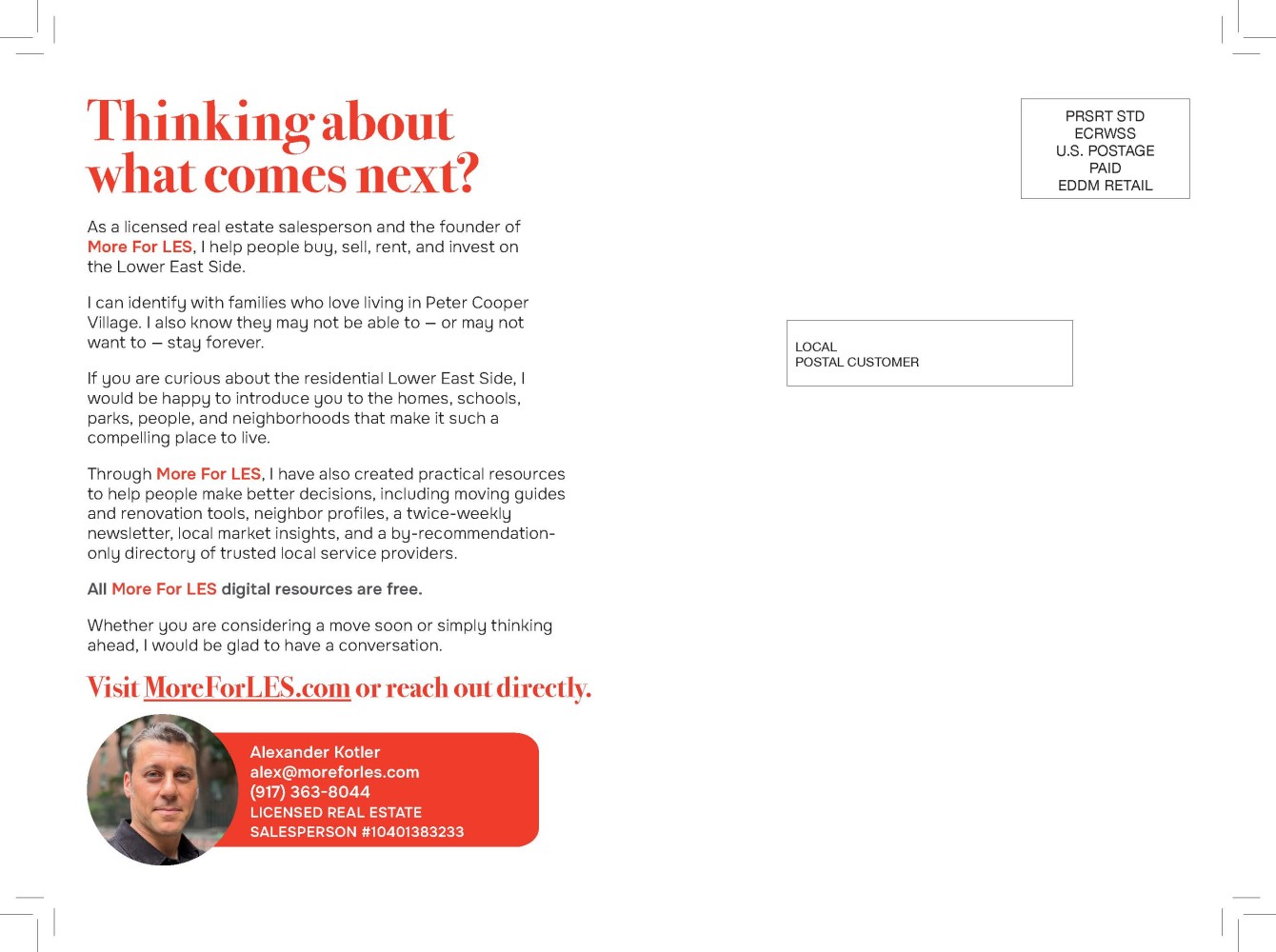
USPS Every Door Direct Mail allows a sender to choose postal carrier routes and deliver the same piece to every eligible address along those routes. Individual names and street addresses are not required. Each postcard displays the EDDM Retail indicia and the simplified addressee: LOCAL POSTAL CUSTOMER
It’s not a highly personalized way to reach a prospect, but is a practical way to reach a concentrated geographic audience. The operative unit is the carrier route — not the building, block, or hand-drawn boundary a marketer might prefer.
It’s an all or none game that prohibits senders from choosing most of a route and not the complete route.
Using the USPS route-selection tool, I identified three routes serving Peter Cooper Village in ZIP Code 10010:
- Route C002: 714 addresses
- Route C011: 595 addresses
- Route C036: 645 addresses
Together, they totaled 1,954 delivery points: 1,934 residential and 20 business addresses. (This actually points to a weakness in the campaign, as the messaging was primarily residential in nature.)
USPS offered the option to exclude businesses, but doing so would have reduced the mailing by only 20 pieces and saved $5.20. I kept them in. Perhaps one of those businesses needs a real estate advisor — or at least something colorful to display in the break room.
Once I knew the routes and the exact number of delivery points, I encountered another complication: printing quantities do not necessarily align with postal-route quantities.
A printer might offer 1,000 pieces, then 2,500, then 5,000. If the route requires 1,954 pieces, the 1,000-piece order is insufficient, while the 2,500-piece order leaves 546 extras.
That is not catastrophic. Extra postcards can be retained, handed out, or used elsewhere. But every unused piece represents money spent on paper, ink, finishing, and production that did not reach its intended audience.
This is why I selected a printer offering a 2,000-output quantity.
Putting the “US” in USPS
Once the cards were printed, I picked them up and inspected the output: print quality, trim, orientation, postal indicia, and the simplified address.
Then I became the fulfillment department.
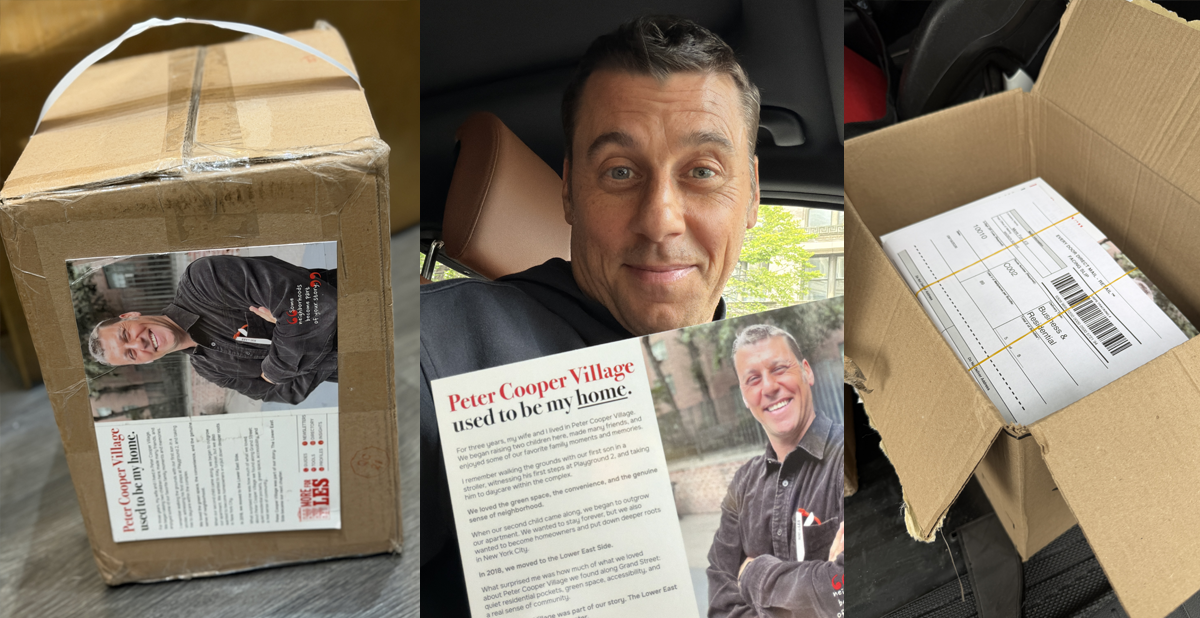
EDDM Retail mailings must be divided by carrier route and placed into bundles of between 50 and 100 pieces. Each bundle needs its own USPS facing slip showing the route, quantity, date, and sequence.
At first glance, this seems simple. Put the postcards into stacks of 100 and keep going.
Except that doing so can leave a final stack below the 50-piece minimum.
If I divided the 714 cards for Route C002 into seven stacks of 100, I would have 14 pieces left over and a problem. Instead, I had to engineer the bundle sizes in advance:
- Route C002: eight bundles — two of 90 and six of 89
- Route C011: seven bundles of 85
- Route C036: seven bundles — one of 93 and six of 92
That produced 22 compliant bundles containing exactly 1,954 postcards.
Before counting, I created a single ready-to-print postal packet containing the drop-off summary, PS Form 3587, and one completed facing slip for every physical bundle. That eliminated the need to print, copy, and hand-label the slips individually.
I left only two items unfinished until the postcards were in hand: the weight of one completed piece and my signature certifying the mailing.
The sorting and bundling took approximately one hour — which I did from the boot of my car while parked on Lexington Avenue. It required $8 in rubber bands, a large flat surface, and enough concentration not to lose count somewhere around postcard number 1,437. After losing count twice, I created a system whereby I would stack and criss-cross piles of ten.
With 22 bundles banded, I hauled two heavy boxes of cards into the post office, pausing once to rest and re-grip, before paying $508.04 in postage and leaving the rest to USPS.
That brought my total to $397.42 (printing) + $8 (rubber bands) + $508.04 (postage) = $913.46, plus tax and time.
They’ve Got Mail. What About Me?
The economics of a campaign like this are unusually asymmetric. The cost is relatively modest, while the value of converting even a single recipient into a client can exceed that investment many times over. I don’t need dozens of transactions for the campaign to pay for itself. One could do it — with considerable room to spare.
This enticing asymmetry is, of course, predicated on someone reaching out.
Encouragingly, I did hear from a friend who lives in Peter Cooper Village. He texted me the next day, with a photo of the postcard: “Look at that 😀”
One of my neighbors, too, who has a son living in Peter Cooper Village, told me that he’d received and recognized my postcard.
So, while no one has yet called to retain me or inquired about opportunities to work together, the campaign has been:
- Successfully, efficiently, and quickly activated
- Paid for and kept toward the lower end of the budget
- Verified and received by residents in Peter Cooper Village
I started this piece by saying that I am not well enough known. More precisely, I need to be known by more of the right people before they need what I do.
This EDDM campaign will not do it on its own. Someone receiving my postcard may not be thinking about buying a home. They may not be thinking about it six months from now. The question is whether, when that inflection point eventually arrives, More For LES is a name they recognize — and whether the story I told gave them some reason to remember it.
Until then, I will keep working hard and working earnestly to become better known, one postcard, one address, one newsletter at a time.
You may also enjoy

Are You Mullet or Bandana-Rama?
A LinkedIn Original Publication

Behind the Scenes: The Hidden Conversations of the Lower East Side
A LinkedIn Original Publication

Get Movin': The Official More For LES Moving Guide