

Tremors in Midtown Trigger Traumas from 1999 on the Lower East Side
What Pfizer HQ and an LES Parking Garage Have in Common
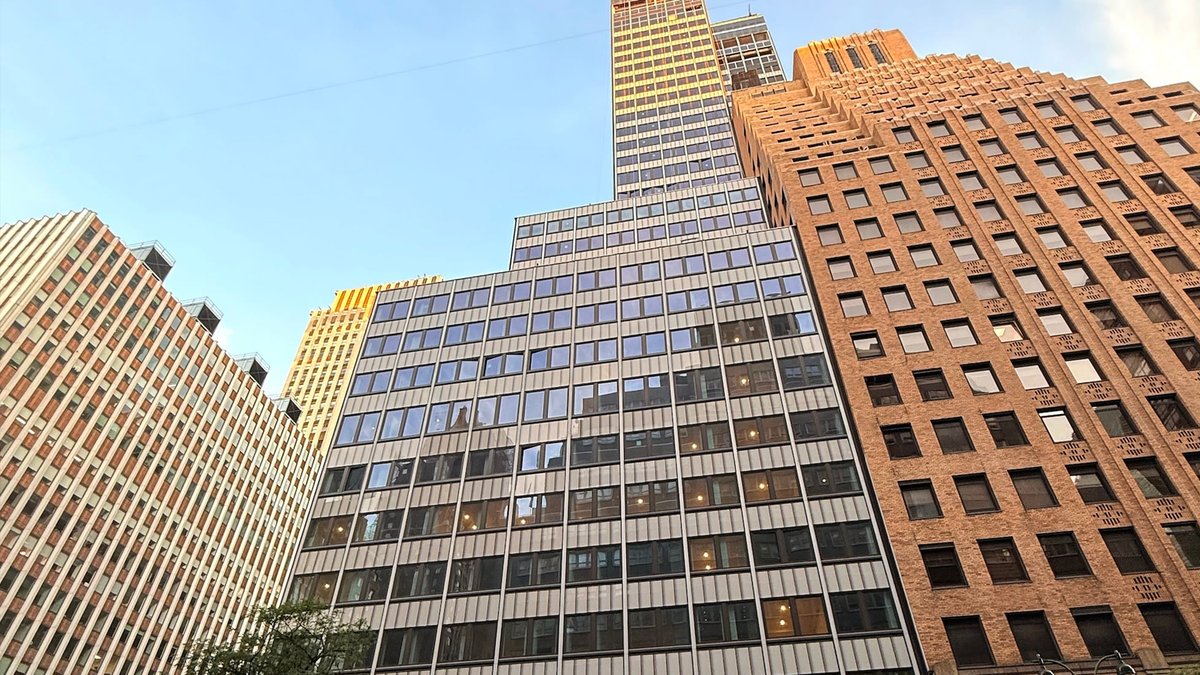
This past Tuesday morning, New Yorkers in Midtown East took cover amid reports of an unstable building at the corner of 42nd Street and 2nd Avenue.
235 East 42nd Street
The site, located at 235 East 42nd Street, is the former Pfizer headquarters, which is now undergoing an office-to-residential conversion. Construction workers reported falling bricks before inspectors determined that two interior steel support columns had buckled. Yikes!
Emergency officials evacuated the building, neighboring properties, a nearby hotel, a school, and possibly even the Gap on 42nd and 3rd, although this has not been verified by the one shopper there who was trying on the brand’s signature baggy khakis.
No injuries were reported.
For many New Yorkers, the news was terrifying. For longtime residents of the Lower East Side, though, the incident stirred memories of a structural failure much closer to home.
When the Lot Became a Little...
Just after 11:00 p.m. on January 15, 1999, the surface portion of the plaza and playground above Seward Park Cooperative’s underground parking garage collapsed.
Site of the Seward Park Cooperative Parking Garage
A section of concrete, and everything above it, fell into the garage below, leaving a massive crater and more than 50 vehicles crushed. Picture a hole the size of the Statue of Liberty, if she decided to lie down and take a nap.
As per the Pfizer building, no injuries were reported. Pfortunately.
This may have been due to both the time and season, as six months later the plaza may well have been full of residents and visitors.
Residents described hearing what sounded like an explosion or earthquake as nearby buildings shook. About 40 apartments were evacuated while engineers confirmed that the residential towers themselves remained structurally independent from what remained of the garage.
In the aftermath, investigators looked into the contributing factors and identified a unique combination of circumstances.
Residents had reported flooding across the plaza earlier that day, with standing water leaking into the garage below. The preceding days had brought heavy snow, freezing rain, and ice, followed by thawing conditions. According to Buildings Commissioner Gaston Silva, the reinforced concrete roof slab became saturated with water, increasing its weight, while clogged drains prevented proper drainage.
Oddly, though, the reinforced concrete slabs appeared to have separated from otherwise intact support columns, with reinforcing steel pulling unusually cleanly from the concrete.
He said, rather bluntly: “Concrete like that should last 100 years.”
This led to further inspections of buildings designed by architect Herman Jessor, including Hillman Houses and East River Housing, as well as Penn South in Chelsea.
No Parking...or Resolution
After the collapse, Seward Park retained a public adjusting firm to manage an insurance claim against Greater New York Mutual Insurance Company, an effort that took more than a decade.
A jury initially awarded $18.4 million, including interest, but an appellate court reduced the judgment to less than $12 million. In 2010, the cooperative reached a settlement requiring it to return $3.25 million to the insurer, ending one of the principal insurance disputes.
It would take another six years before the matter was truly closed.
The public adjusting company, working on behalf of Seward Park—the policyholder—to evaluate, document, and negotiate its property damage claims, argued that it was entitled to 7% of any insurance recovery. Seward Park, on the other hand, had secured the judgment through outside counsel. Ultimately, Seward Park paid the public adjuster $950,000 to close the books on one of the longest-running legal sagas in the cooperative’s history.
What’s the Connection?
A destabilized Midtown office-to-residential conversion and a collapsed Lower East Side parking garage have little in common, other than frightening engineering problems and, thankfully, no casualties (to date).
But both incidents are reminders that buildings are incredibly complex systems. When something unexpected happens, the consequences can extend far beyond the engineering itself and have a devastating impact on people.
The immediate reaction by the developer in Midtown was to express confidence that the issue was localized, could be stabilized, and that construction would continue soon. Perhaps that will prove true. Perhaps not.
Structural stabilization inside a dense urban area—surrounded by occupied buildings, major streets, transit infrastructure, hotels, and thousands of daily pedestrians—is a complicated and risky undertaking.
In this case, it’s fortunate that 235 East 42nd Street is under construction. Had the building been occupied, or had the surrounding area been filled with residents—as at the greater Seward Park complex—the situation could have been markedly different, and worse.
Sources
- The New York Times, Flooded Plaza Collapses Into Garage on the Lower East Side
- The New York Times, Spotlight on Architect’s Work In Wake of Garage Collapse
- Habitat Magazine, A Co-op’s Long Legal Nightmare Is (Finally) Over
- The Lo-Down, Seward Park Co-op and Insurance Company Settle Garage Collapse Lawsuit
- The New York Times, Evacuated Manhattan Building Is Stable for Now, City Official Says