

Gods or dogs? In the 1980s, it all depended on the size of your leash — and which end you held
Book Review: The Gods of New York
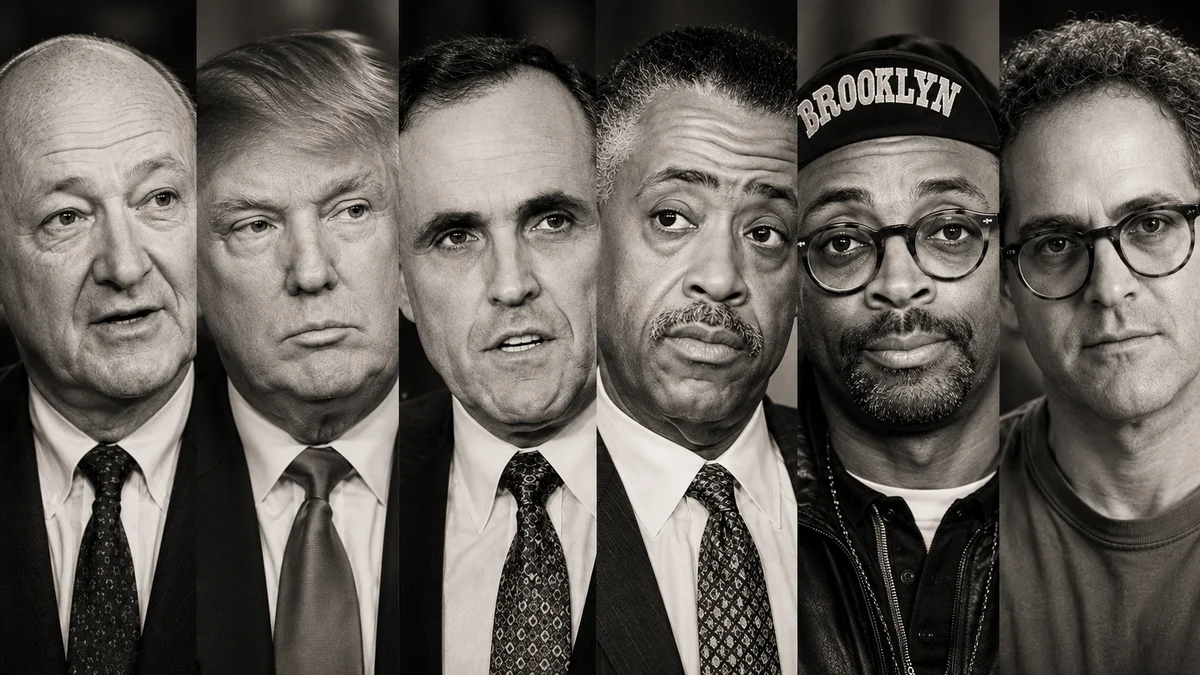
The Gods of New York is a fantastic, can't-put-it-down retelling of New York City from the late 1970s through the end of the 1980s. The city was undergoing a profound transformation in the post-Vietnam era, grappling with poverty, crime, drugs, homelessness, the AIDS epidemic, racial polarization, political corruption, and the emergence of a new culture of celebrity, media, and real estate speculation.
Did I leave anything out?
Jonathan Mahler tells that story through the rise — and, in some cases, the fall — of many of the era's defining figures, including three-term Mayor Ed Koch, real estate developer Donald Trump, U.S. Attorney Rudy Giuliani, the Rev. Al Sharpton, filmmaker Spike Lee, ACT UP founder Larry Kramer, Police Commissioner Benjamin Ward, and Ed Koch's successor, David Dinkins, New York City's first Black mayor.
For me, the entire book is a catalog of my childhood. Ed Koch came to power just before I was born, and I remember many of the events Mahler recounts — many of them horrific. I recall the Howard Beach killing, the Tawana Brawley controversy, Bernhard Goetz's vigilantism, the crack epidemic, the AIDS crisis, the Tompkins Square Park riots, and the corruption surrounding the Parking Violations Bureau.
This, paired with Nancy Reagan’s “Just Say No” campaign, served as the backdrop of my childhood. As a kid, I didn't understand the issues, nor did I see them holistically. Mahler's account provides the much-needed context that was missing for me at the time.
I remember Donald Trump — not as a politician, but as a larger-than-life caricature and tabloid personality. Reading about his rise, it's difficult not to recognize many of the same traits that define his public persona today: a mastery of media attention, a willingness to exaggerate, and an instinct for making himself the story.
The same is true of Al Sharpton. Today's somewhat reserved television personality first emerged during this period, serving simultaneously as advocate, agitator, organizer, and lightning rod. Regardless of where one comes down on his tactics, it's impossible to understand modern New York politics without understanding his role in this era and how instrumental he was in forcing issues affecting Black New Yorkers into the public conversation.
Mahler also captures the cultural pulse of the city. Do the Right Thing and the genius of Spike Lee distilled the emotion of the moment, while Public Enemy provided much of its soundtrack. Looking back, it’s impossible to overestimate the importance of his contributions to film-making, let alone advertising. (See: Hang Time, and It’s Gotta Be the Shoes.) Spike Lee didn't just document New York — he shaped how the rest of the world came to see it.
For me, the AIDS epidemic became real when Ryan White appeared on magazine covers in grocery store checkout aisles. Ryan looked like me and was only a few years older, and that terrified me. Arthur Ashe would later become another prominent public face of the disease before Magic Johnson dramatically changed public perception in the early 1990s.
Tireless activists like Larry Kramer forced the epidemic into the public consciousness through relentless advocacy. This storyline, like that of Trump, made the book feel unexpectedly contemporary, as Anthony Fauci appeared. Long before COVID-19 made him a household name, he was already a central figure in the government's response to AIDS, navigating an unprecedented public health crisis while gradually earning the trust of activists who had initially viewed him as part of the problem.
Mahler also examines Ed Koch's political instincts and his handling — and, many would argue, mishandling — of both the AIDS epidemic and several of the city's defining racial conflicts. He also explores the persistent questions surrounding Koch's private life and the ways in which they complicated his relationship with Larry Kramer and many within the gay community during the height of the AIDS crisis.
For many who recall Mr. Koch’s famous phrase, “How’m I doing,” after three terms in office, New Yorkers resoundingly answered, “Not great!” After numerous corruption scandals, particularly the Parking Violations Bureau scandal and the suicide of Queens Borough President Donald Manes, his desire to be “Mayor For Life” ended rather unceremoniously.
The remarkable thing is how relevant this book still feels today.
The Lower East Side plays only a minor role in the narrative, if any explicitly, but many of the underlying issues remain strikingly familiar. Political polarization remains intense. The affordable housing crisis continues to define life in New York. Rent freezes may provide temporary relief for tenants, but they do little to address the widening gap between rising operating costs, insurance premiums, and the financial realities facing many buildings with regulated apartments that still require maintenance and capital improvements.
Likewise, the developer who once made headline-grabbing bets on Atlantic City now occupies the White House, often displaying many of the same instincts and behaviors Mahler chronicles in his earlier career. Following another period marked by scandal and political upheaval, New Yorkers have now elected Zohran Mamdani, a democratic socialist, as mayor. Whether his administration succeeds where David Dinkins ultimately struggled remains to be seen.
Perhaps what resonated with me most is how much of New York's institutional memory survives in neighborhoods like the Lower East Side. Unlike many places, this is not a neighborhood defined by constant turnover. Many residents have been here for generations. They understand why they love this place, why they continue to fight for it, and why they choose to stay.
Regardless of who occupies City Hall, Albany, or Washington, the real work of improving New York continues in co-op board meetings, school communities, neighborhood organizations, community board meetings, and conversations among neighbors. That continuity — and the people who sustain it — may ultimately be the city's, and this neighborhood’s, greatest strength.
Regardless of where you fall on the political spectrum, or what vision you have for New York or America, The Gods of New York offers a thoughtful, balanced, and deeply engaging portrait of the personalities, ambitions, egos, and crises that shaped modern New York. Mahler writes with empathy without sacrificing honesty, and with enough historical distance to let readers reach many of their own conclusions.
For me, it connected the dots. It brought clarity to memories that had faded with time and reframed the news stories that once felt peripheral but are proving remarkably relevant today.
It's one of the best books I've read about New York City, and one I would enthusiastically recommend.
You may also enjoy

What Henry Roth’s LES foreshadows in the neighborhood today
A review of Call It Sleep and the lasting parallels between Henry Roth's Lower East Side and the neighborhood today.